Finding 01
Students understand therapeutic frameworks.
The challenge begins when they need to apply them in unpredictable, real-world conversations.
Designing confidence before the first real conversation.
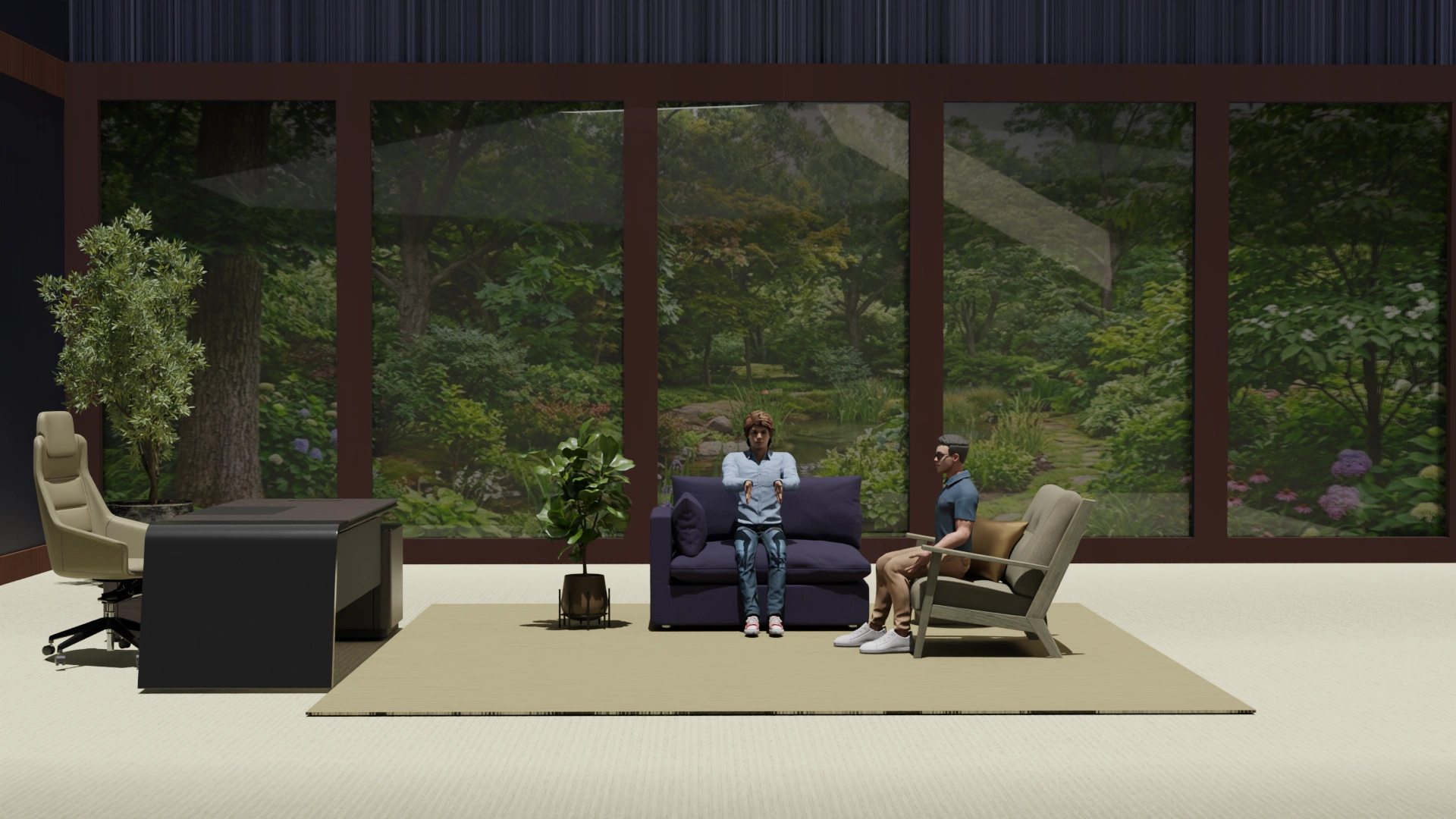
“Therapy is learned through study, but confidence is earned through practice.”
TheraSim
VR Experience Design
UX/UI and VR Designer
6 Weeks
Permanent Collection
Therapy is learned through study, but confidence is earned through practice.
Between learning therapy and practising it lies a space that traditional education rarely fills. TheraSim explores that space, imagining a learning environment where future therapists can build confidence through guided practice before stepping into real clinical settings.
While exploring the world of psychology education, one question kept resurfacing: how do students prepare for conversations they have never had? Cognitive Behavioural Therapy is taught through lectures, textbooks, observation, and supervised learning. These methods build knowledge, but they leave little room for something equally important—practice. Confidence isn't developed by understanding every concept. It grows through repetition, reflection, and experience. TheraSim began as an attempt to explore that missing space. Rather than redesigning therapy itself, the project asks how future therapists might develop confidence before stepping into their first real clinical conversation.
Every investigation begins by understanding the world as it already exists. Before imagining a new way to learn, it was important to understand how future therapists are prepared today—and where that preparation begins to fall short.
The journey began with a simple question. How are future psychotherapists currently trained in Cognitive Behavioural Therapy, and how could that experience better prepare them for real clinical practice?
Education becomes meaningful when theory is allowed to become experience.
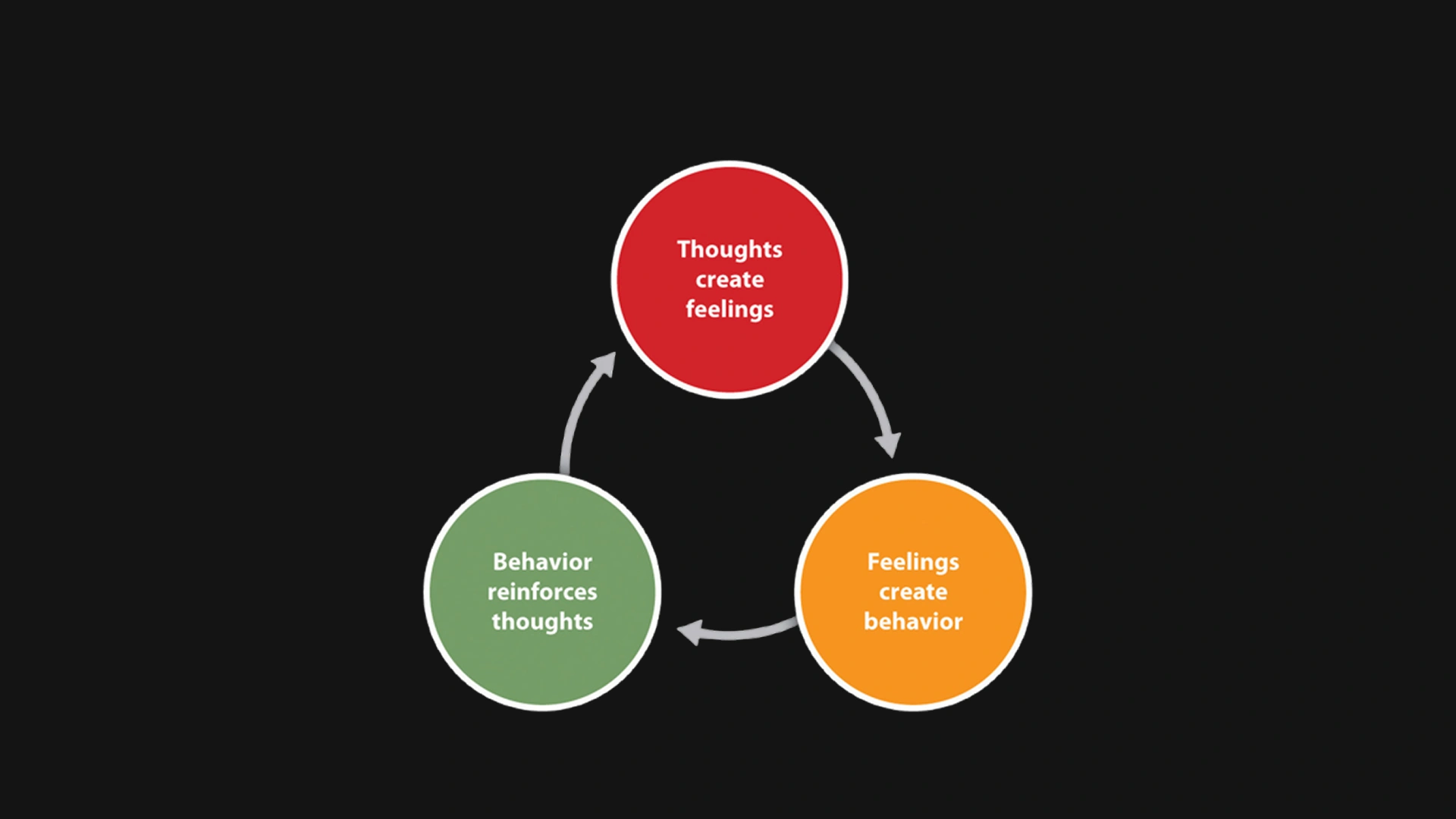
The model of the process of how CBT works.
Before proposing a new way to learn, it was important to understand how psychology students currently develop therapeutic skills. The investigation revealed that while knowledge is built systematically, opportunities to apply that knowledge remain limited until students enter real clinical environments.
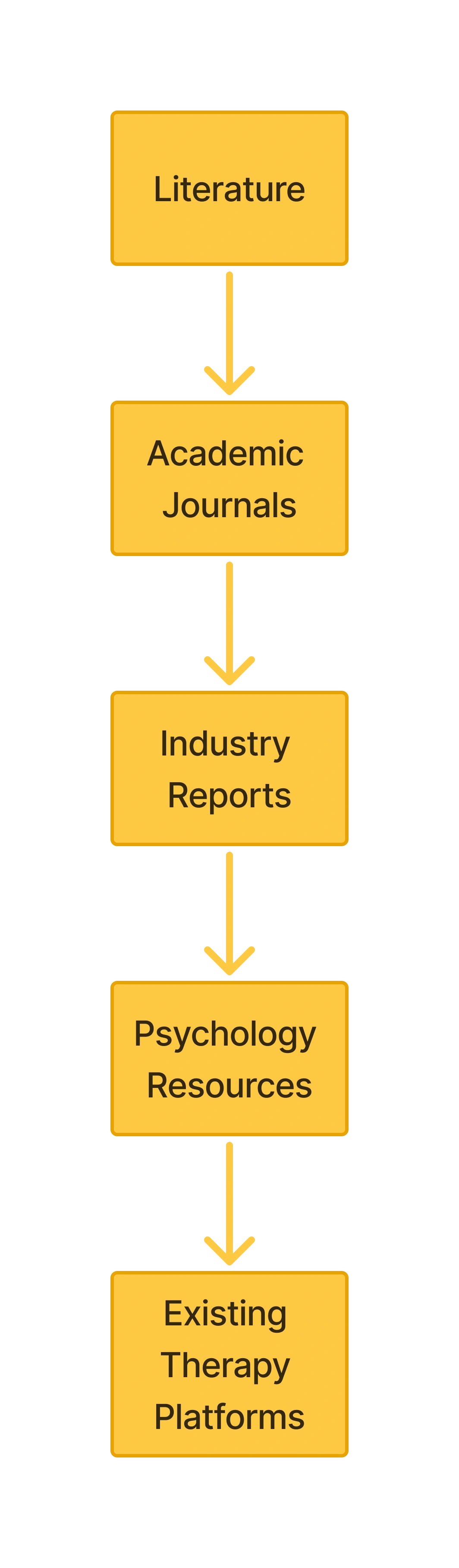
The process of research and types of resources researched for understanding the current state of learning therapy.
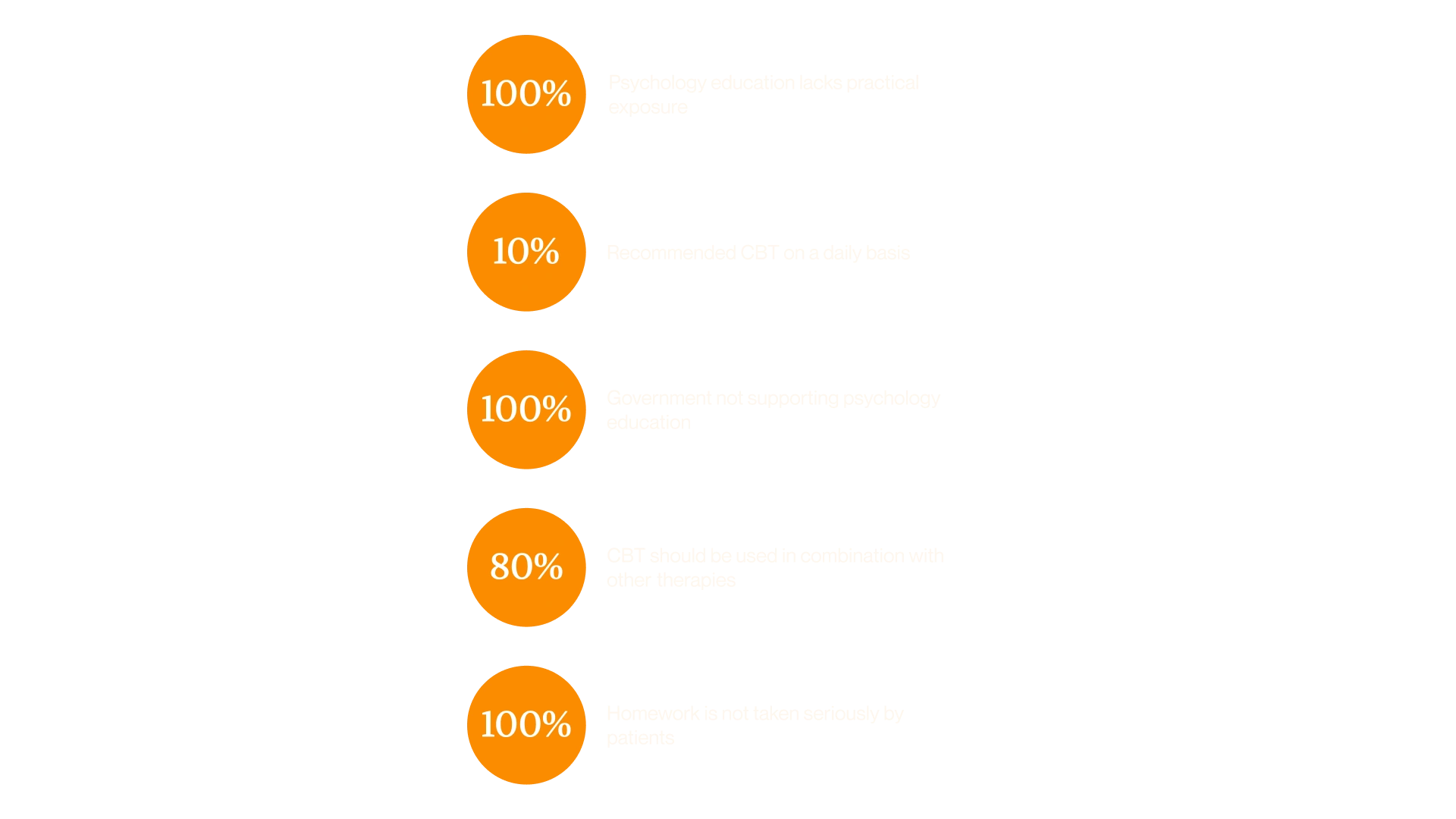
Responses of experts interviewed for research.
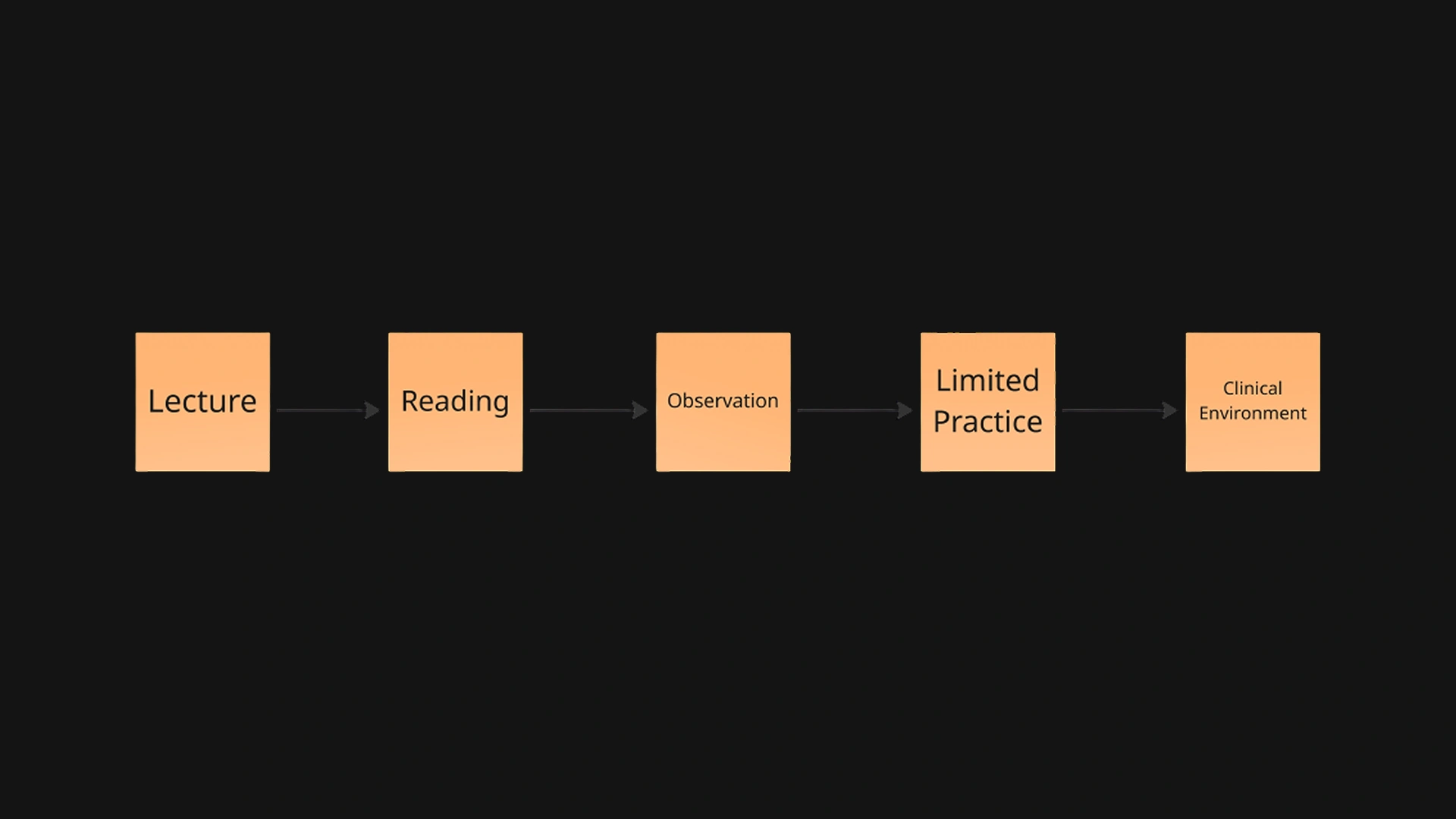
Most practical learning occurs only after students begin interacting with real patients.
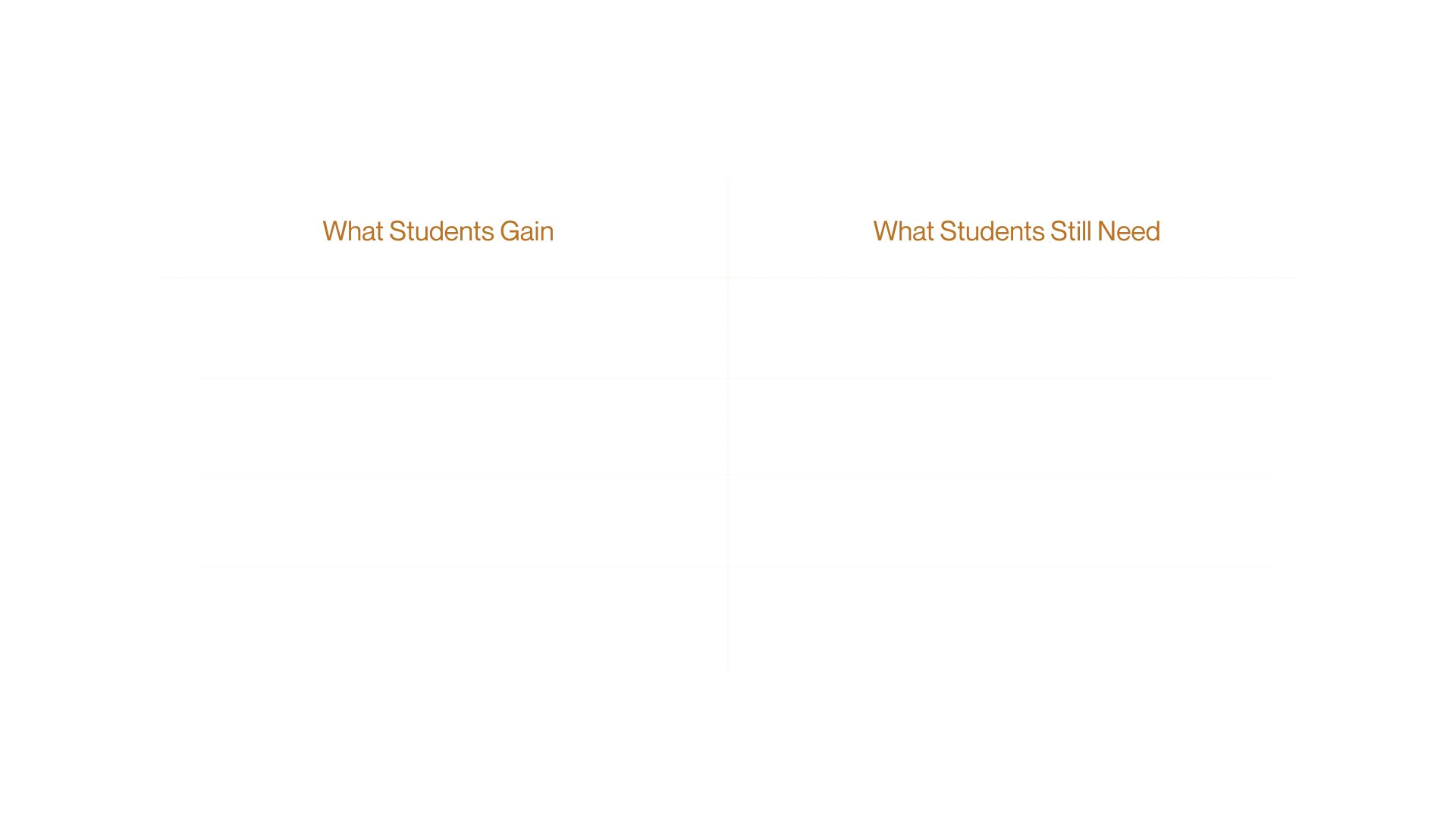
Differences between learning through theory and learning through practice.
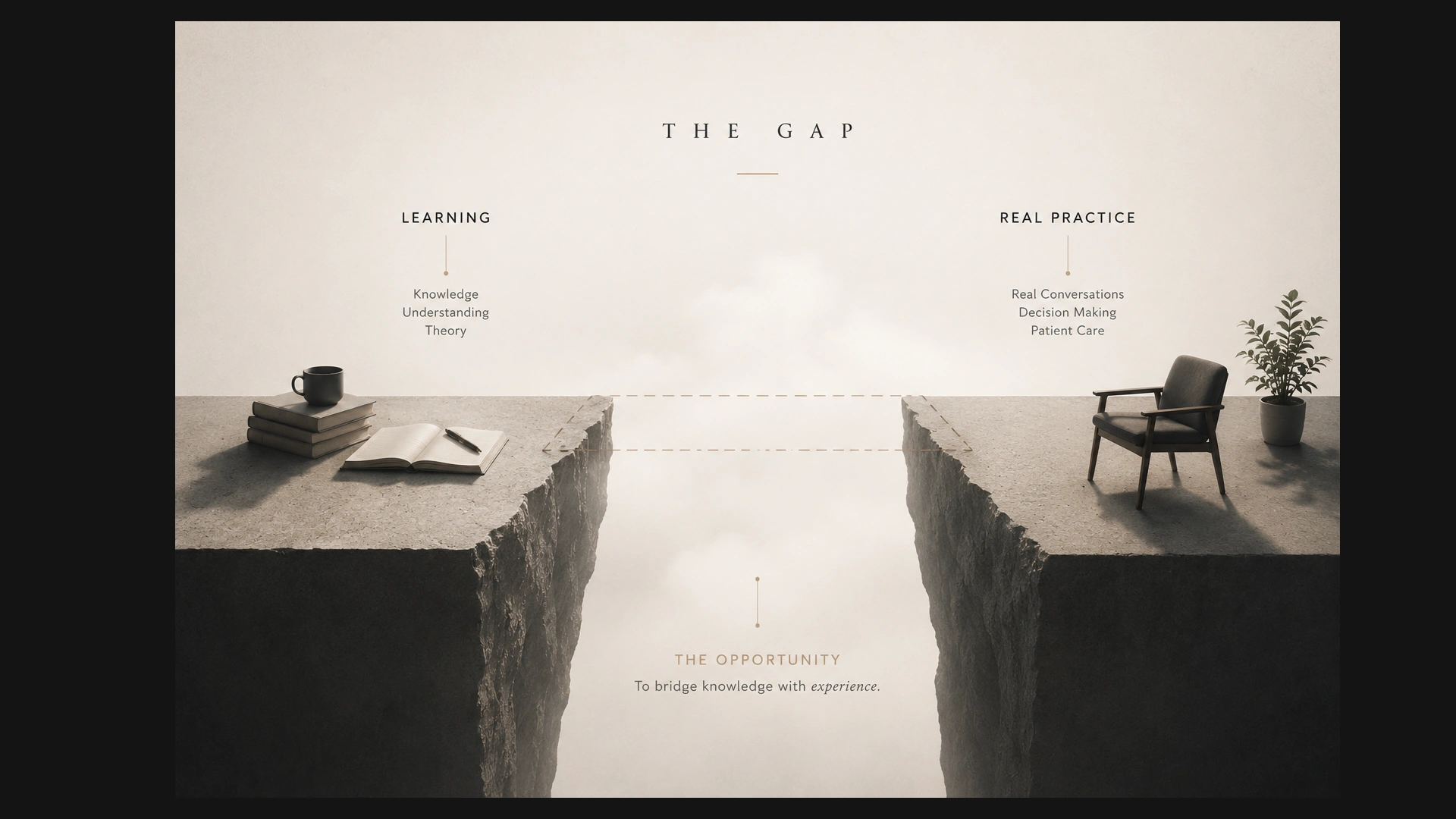
Education builds understanding. Confidence develops through experience.
The challenge begins when they need to apply them in unpredictable, real-world conversations.
Watching therapy sessions helps students understand the process, but it cannot replace the experience of leading one.
Many students encounter meaningful therapeutic interactions only during clinical placements, where mistakes carry real consequences.
Skills such as active listening, questioning, and clinical decision-making require repeated practice in a safe environment.
As the investigation progressed, a consistent pattern emerged. Students weren't struggling
because they lacked knowledge. They were struggling because there were too few opportunities to
transform that knowledge into experience.
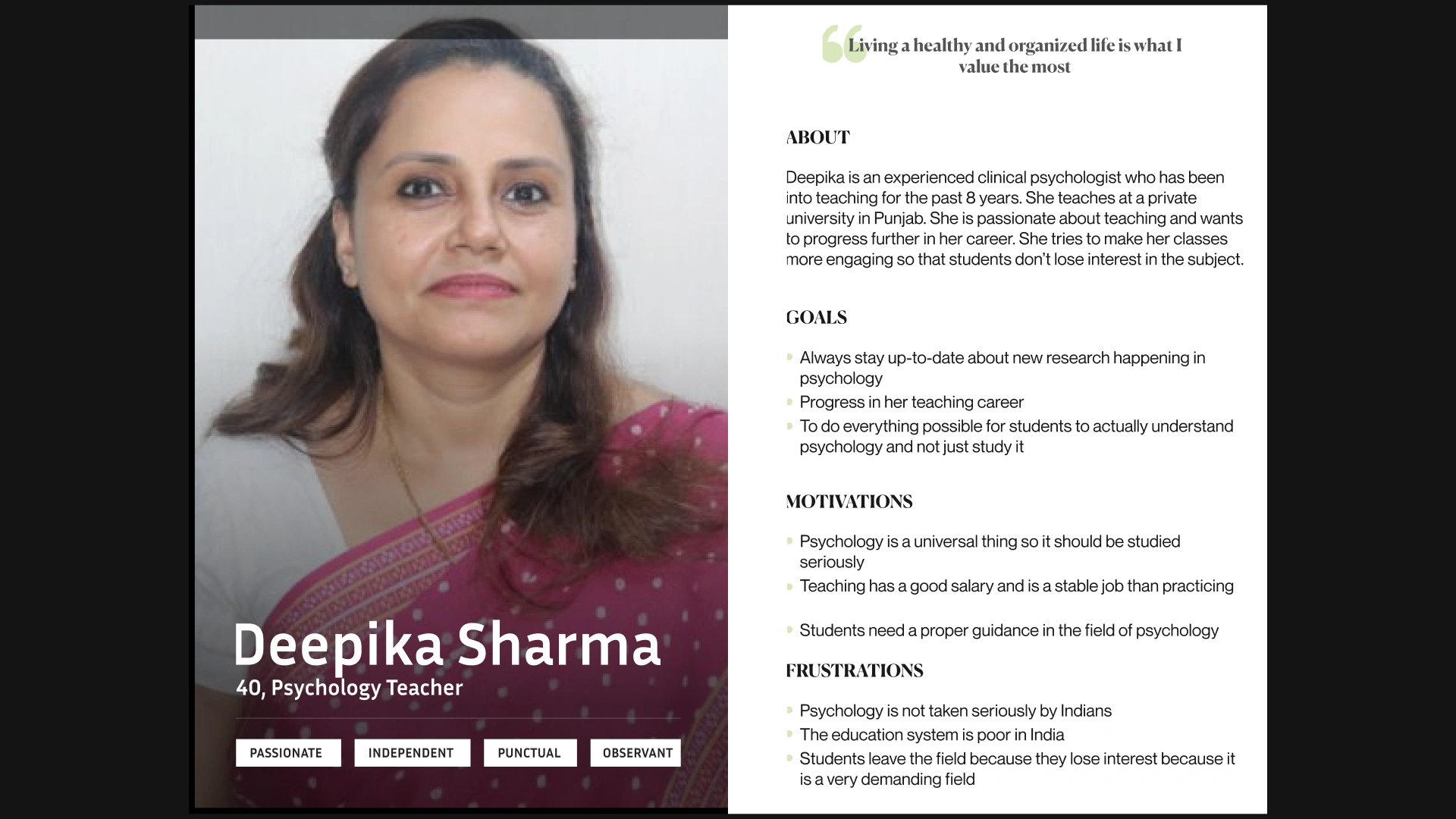
Persona created after compiling research.
Confidence is rarely taught. It is cultivated through experience.
The investigation revealed a recurring gap between understanding therapeutic concepts and applying them in real conversations. While classrooms provide knowledge, confidence is often developed much later, when students begin working with real patient. TheraSim was imagined as a bridge between those two worlds. Rather than replacing traditional education, it extends it through immersive, guided practice. Inside a simulated clinical environment, students can conduct therapy sessions, make decisions, reflect on their approach, and learn from mistakes—all before stepping into a real consultation room. By creating a space where experience can be built safely and repeatedly, the focus shifts from simply learning about therapy to gradually becoming confident in practising it.
Students should be free to make mistakes without affecting real patients.
Understanding grows through doing, not just observing.
Every session becomes an opportunity to improve.
The experience supports growth instead of measuring performance.
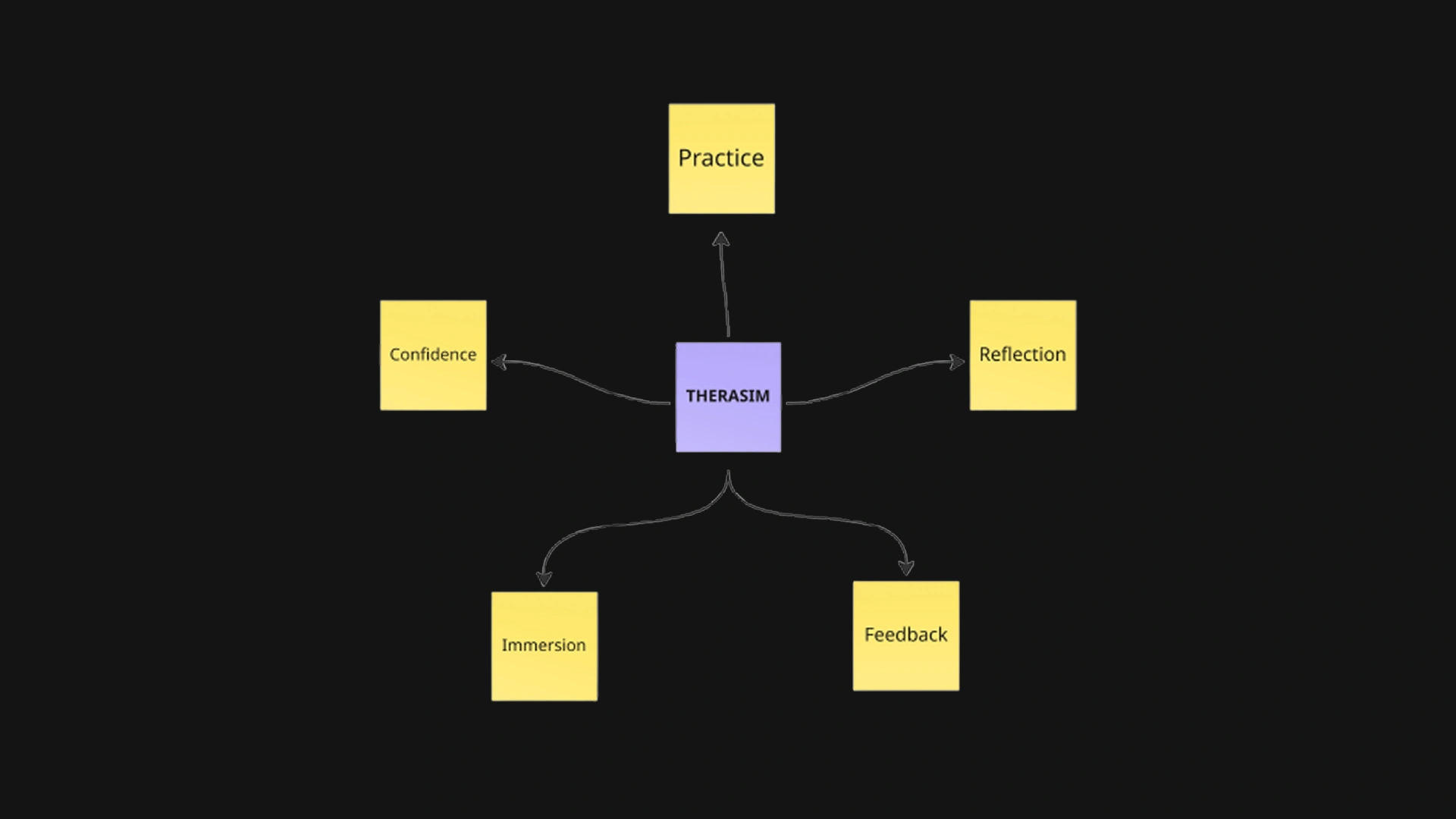
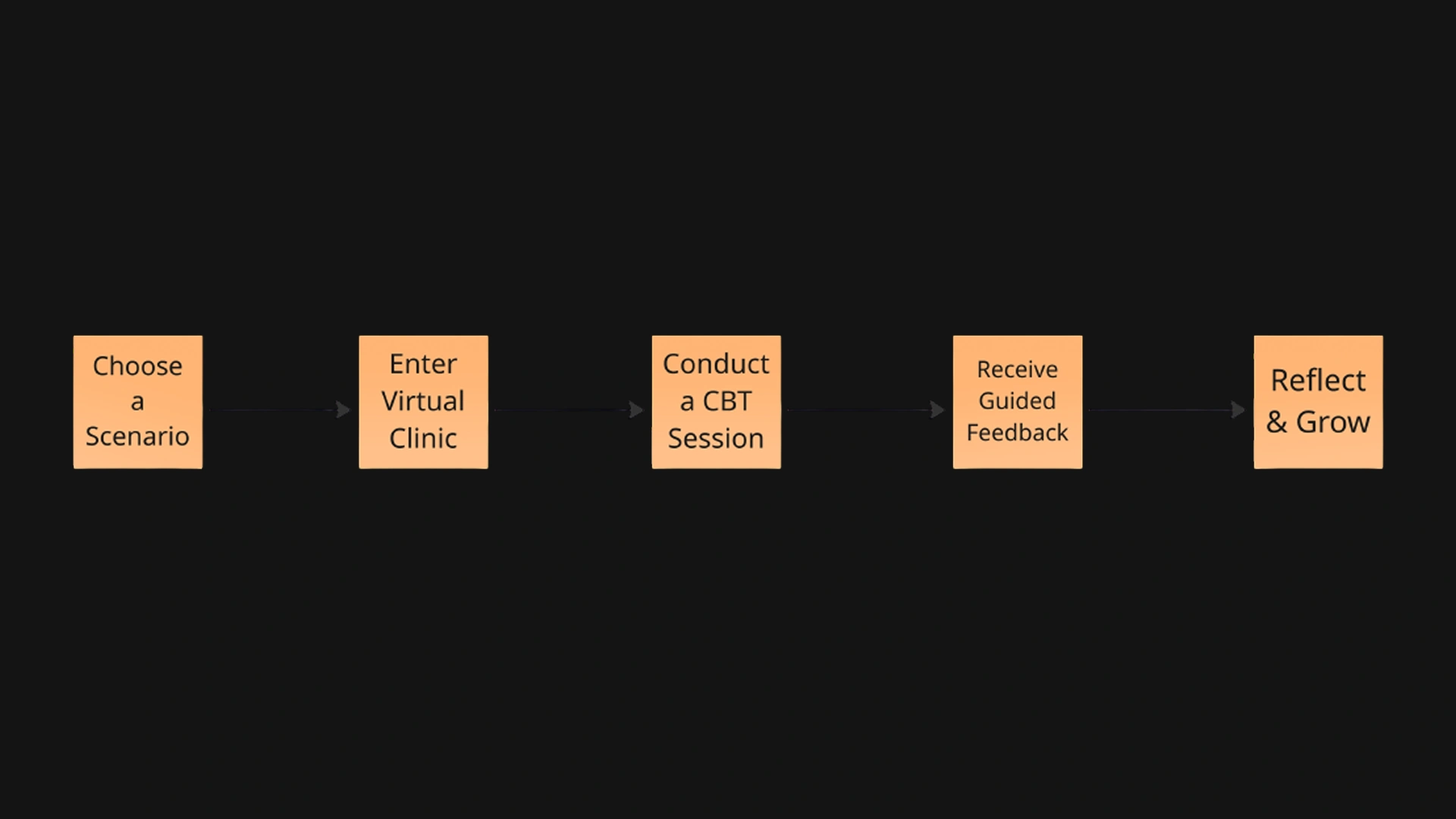
Learning becomes meaningful when knowledge can be safely transformed into experience.
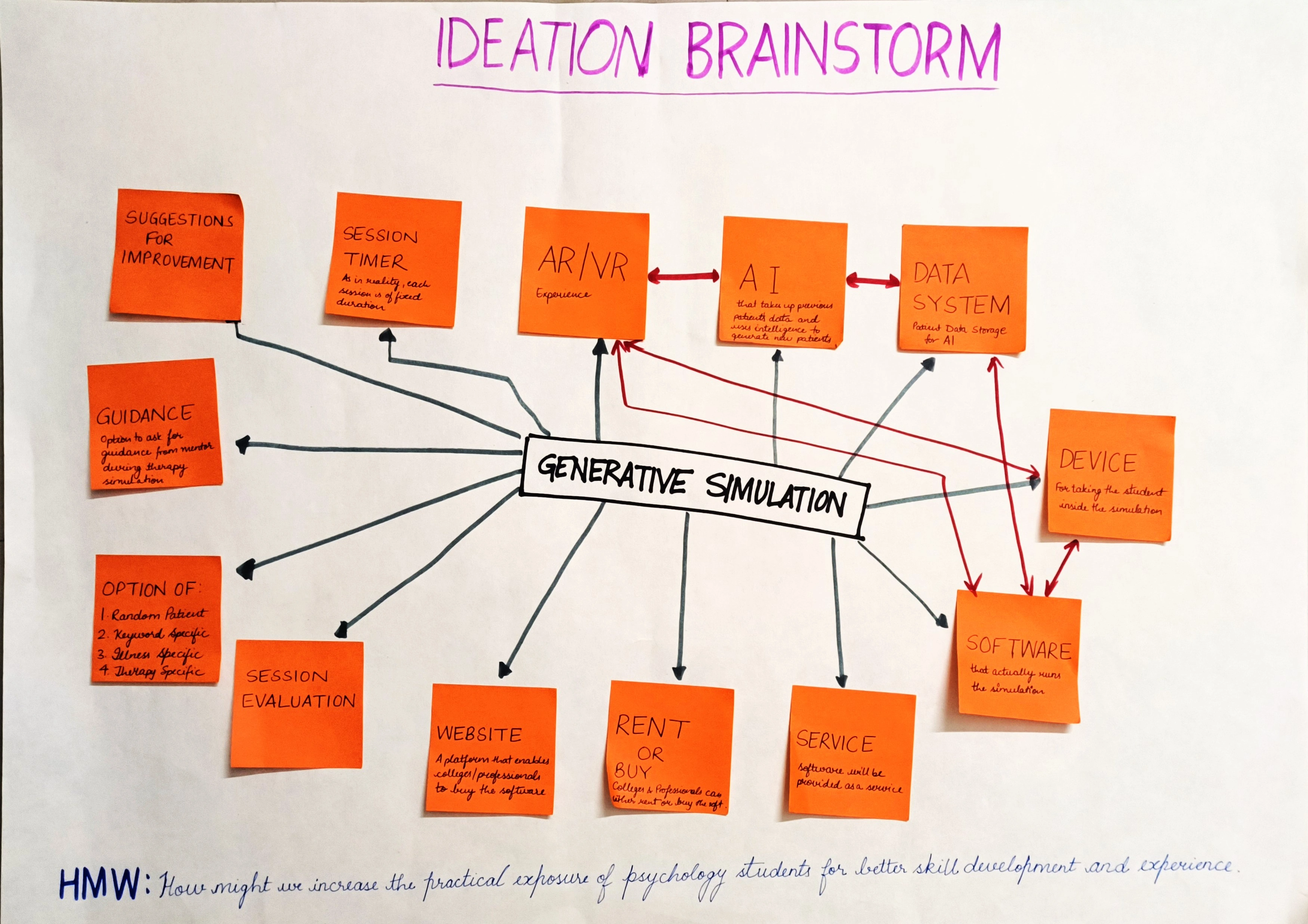
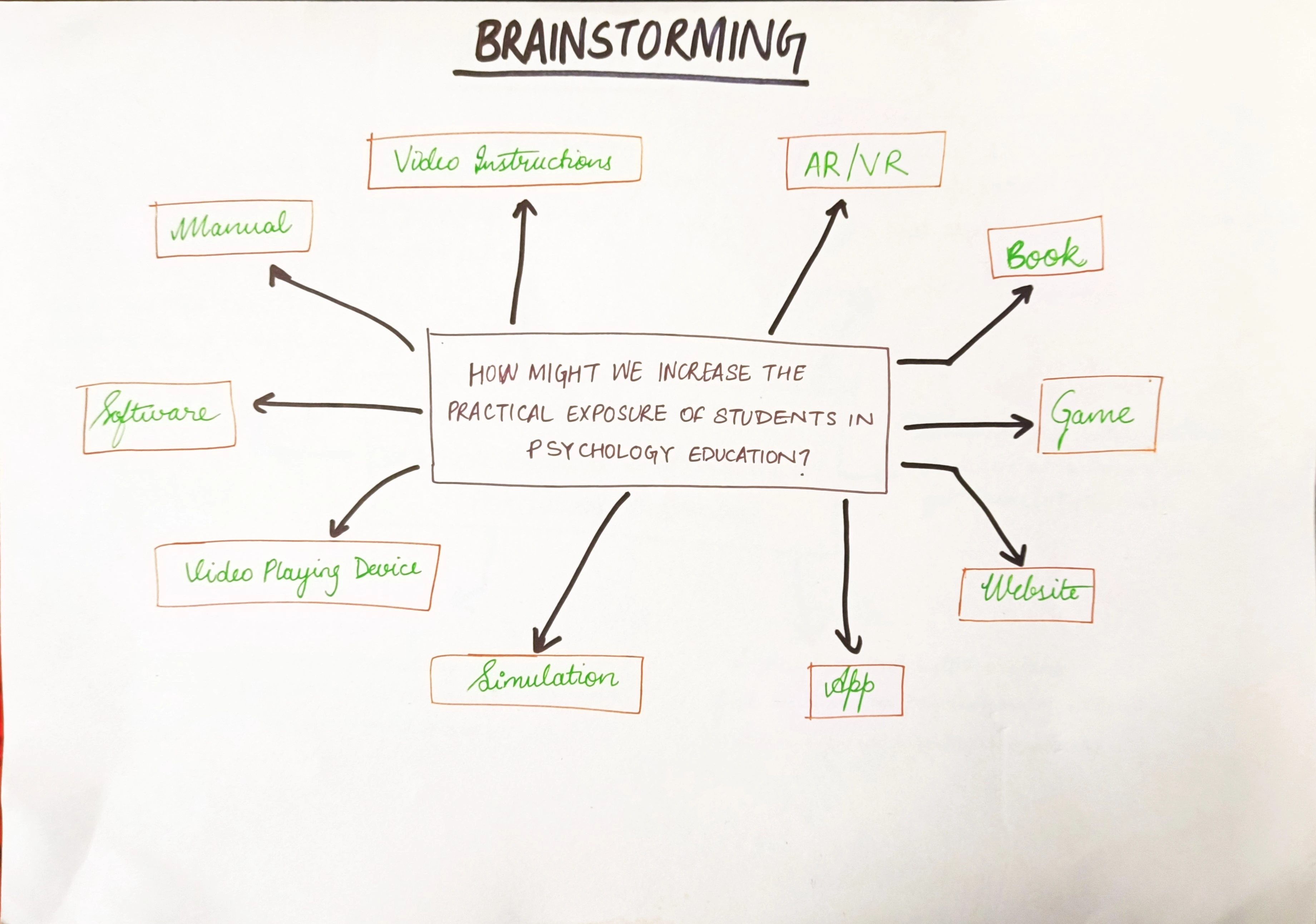
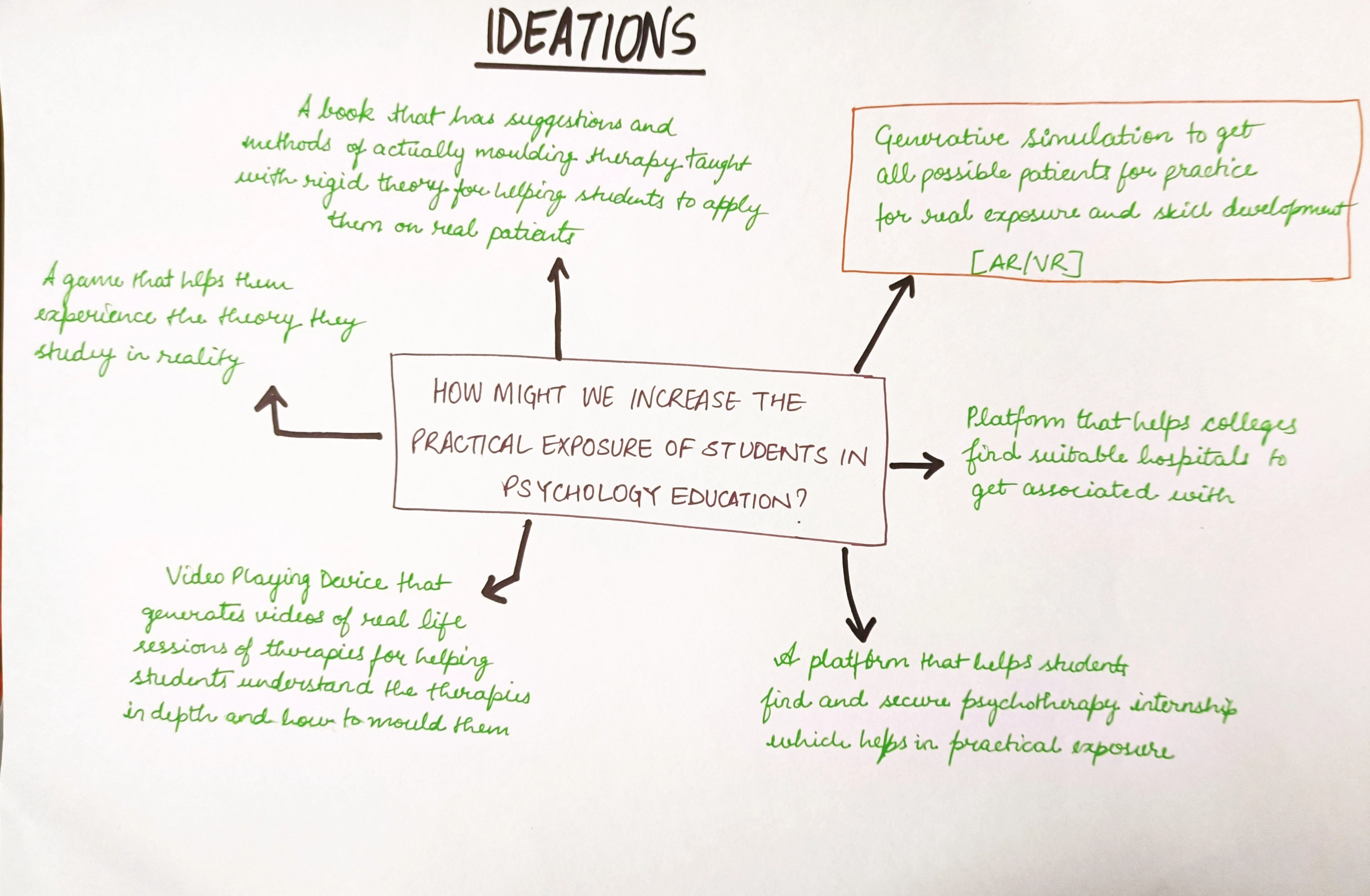
TheraSim is a generative simulation for students of psychology that has the intelligence to simulate all possible patients at random for their practice sessions so that they can gain real experience about the theory they study.
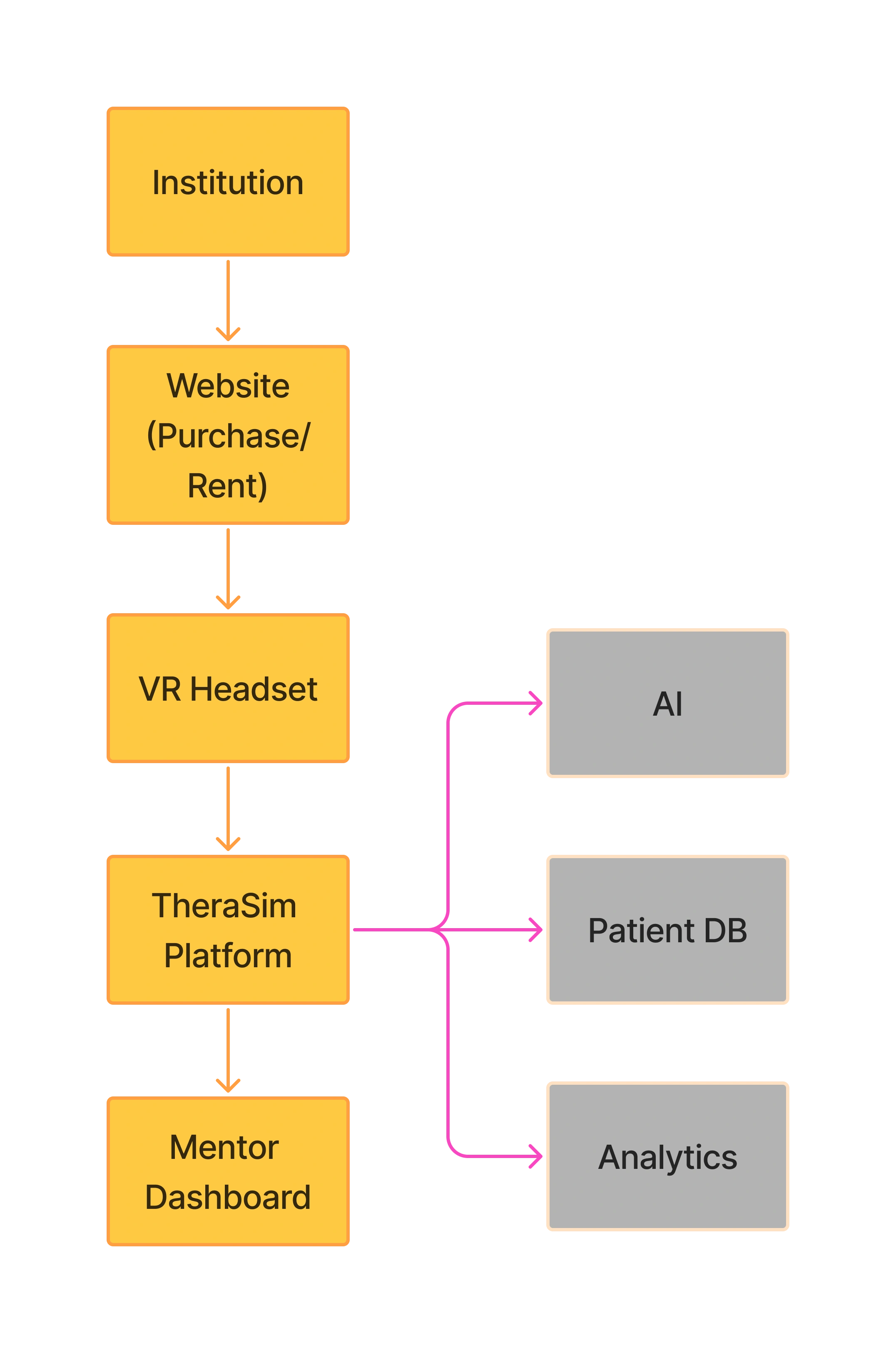
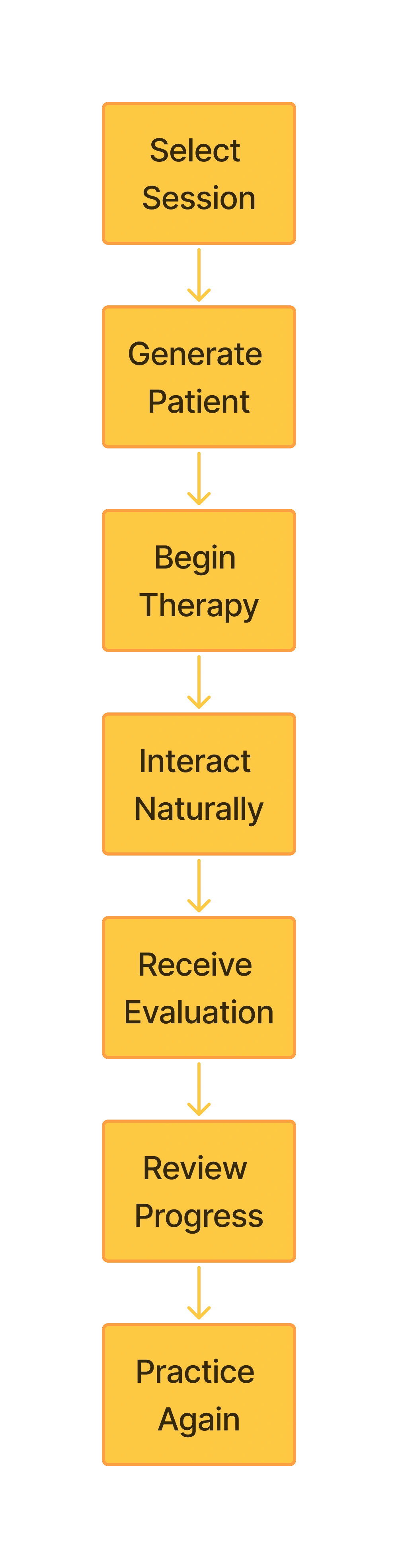
Before exploring the interaction itself, it is important to understand the ecosystem that makes TheraSim possible. Rather than functioning as a standalone application, TheraSim was envisioned as a comprehensive learning platform that combines immersive simulation, intelligent feedback, and patient data into a single educational experience. Initially, the project focused on improving the learning experience for Cognitive Behavioural Therapy (CBT). However, research and interviews revealed that the challenge of gaining practical confidence extends beyond CBT and is shared across many psychotherapy disciplines. This insight expanded the scope of the project, leading to a platform designed to support the practice of multiple therapeutic approaches within a safe, guided environment. The proposed ecosystem consists of five interconnected components: 1. VR Simulation Platform — where students conduct immersive therapy sessions. 2. Artificial Intelligence — responsible for generating dynamic patient responses and providing contextual interactions. 3. Patient Data System — a structured database that enables AI-driven patient behaviours and diverse clinical scenarios. 4. VR Headset — the medium through which students experience the simulated therapy sessions. 5. Service Website — a platform through which institutions can purchase or subscribe to the TheraSim service. Together, these components create an end-to-end learning experience that enables students to practise, reflect, and build confidence before entering real clinical environments. The following user flow illustrates how these components come together throughout a typical learning session:
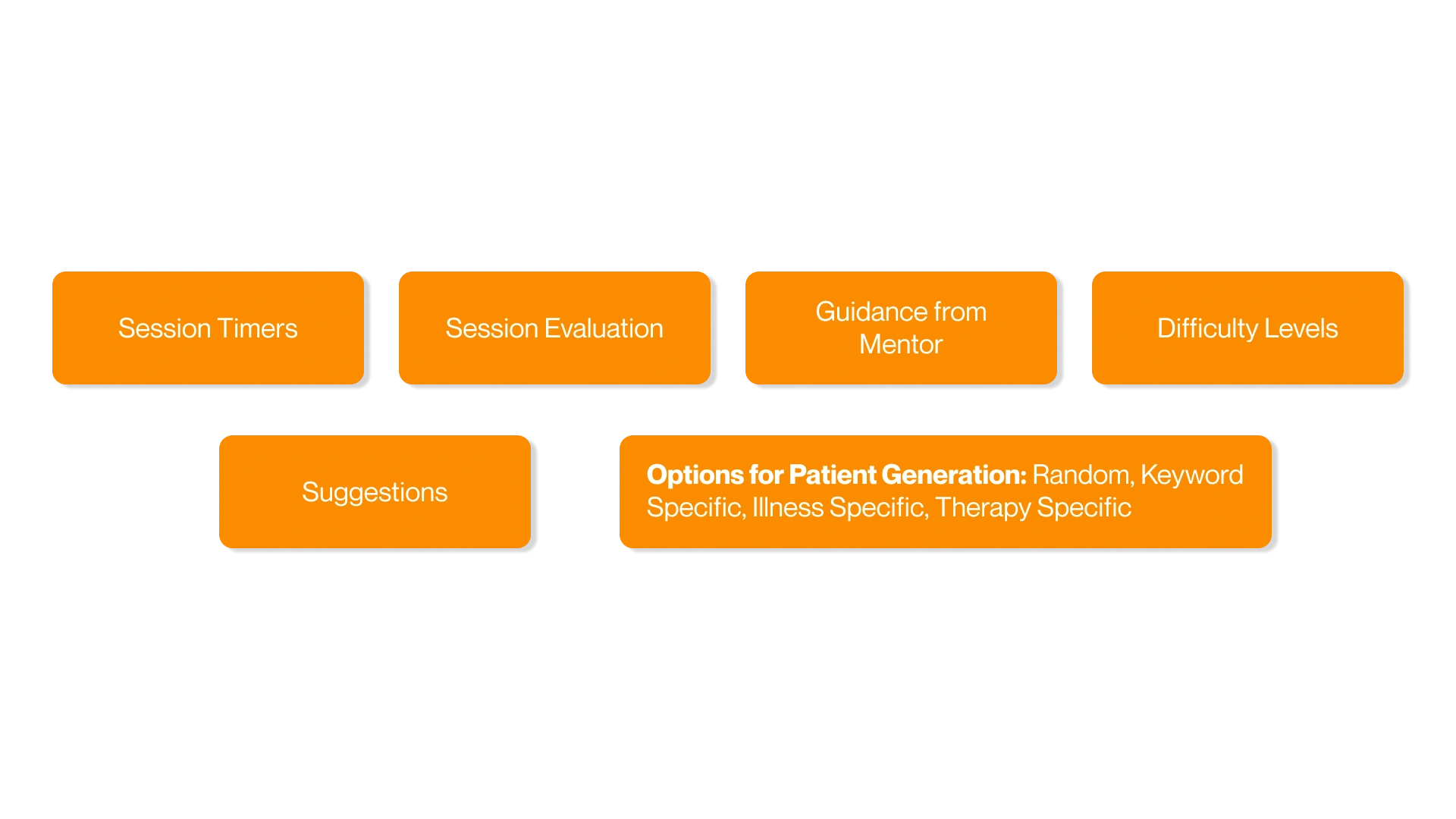
These are the basic components required to execute TheraSim.
The simulation has options for selecting the type of AI-generated patient according to the needs of the student at that moment. 1. If they wish to get any random patient, the Random Generation option is there. 2. For specific symptoms and keywords related to the patient, Specific Generation is available. 3. If the student wants to practice therapy for a specific illness(es), Illness Specific generation is the option for them. 4. Lastly, if they want to practice particular psychotherapies, they can generate that simulation through Therapy Specific generation.
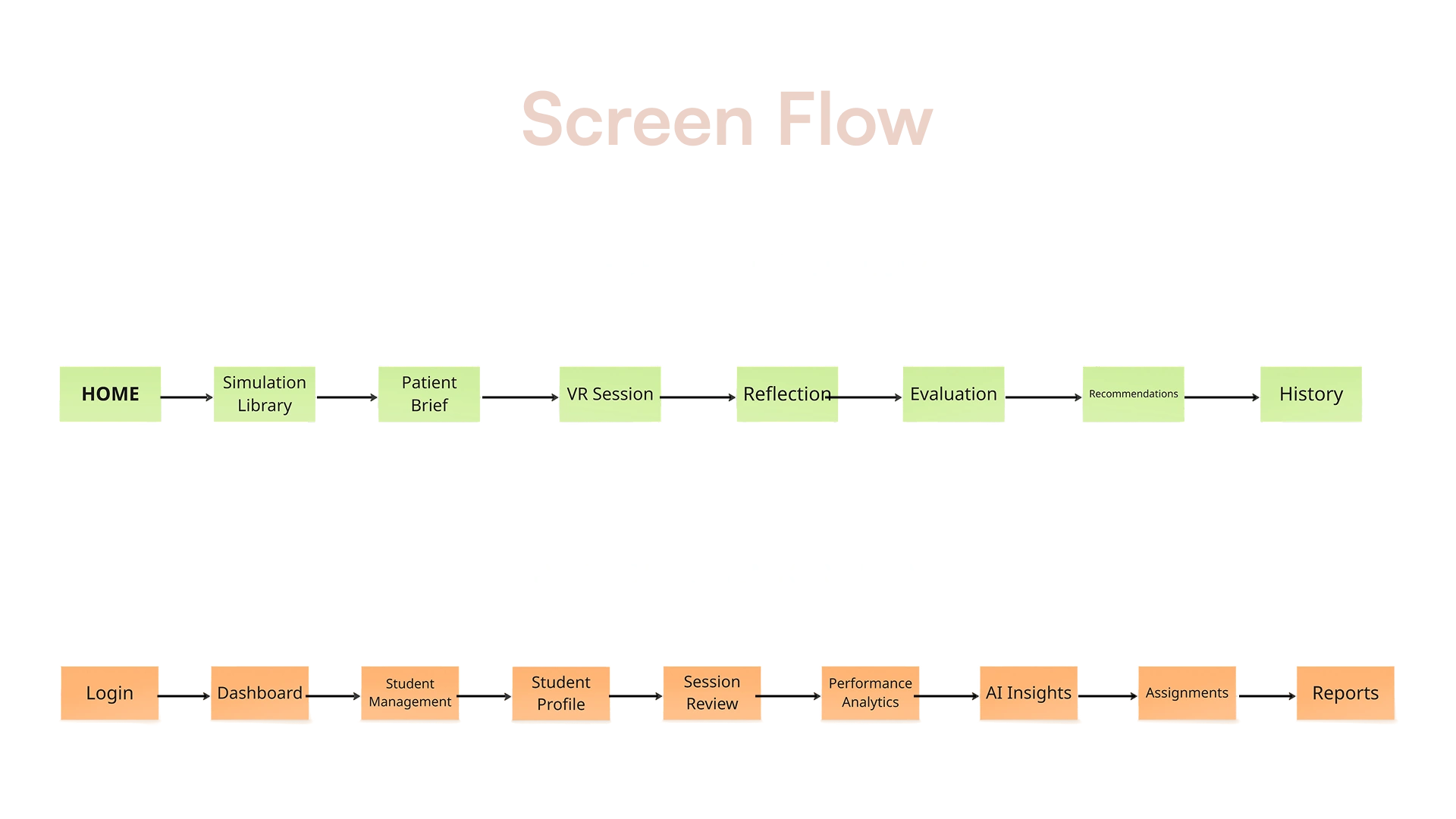
The journey/flow of a TheraSim user.
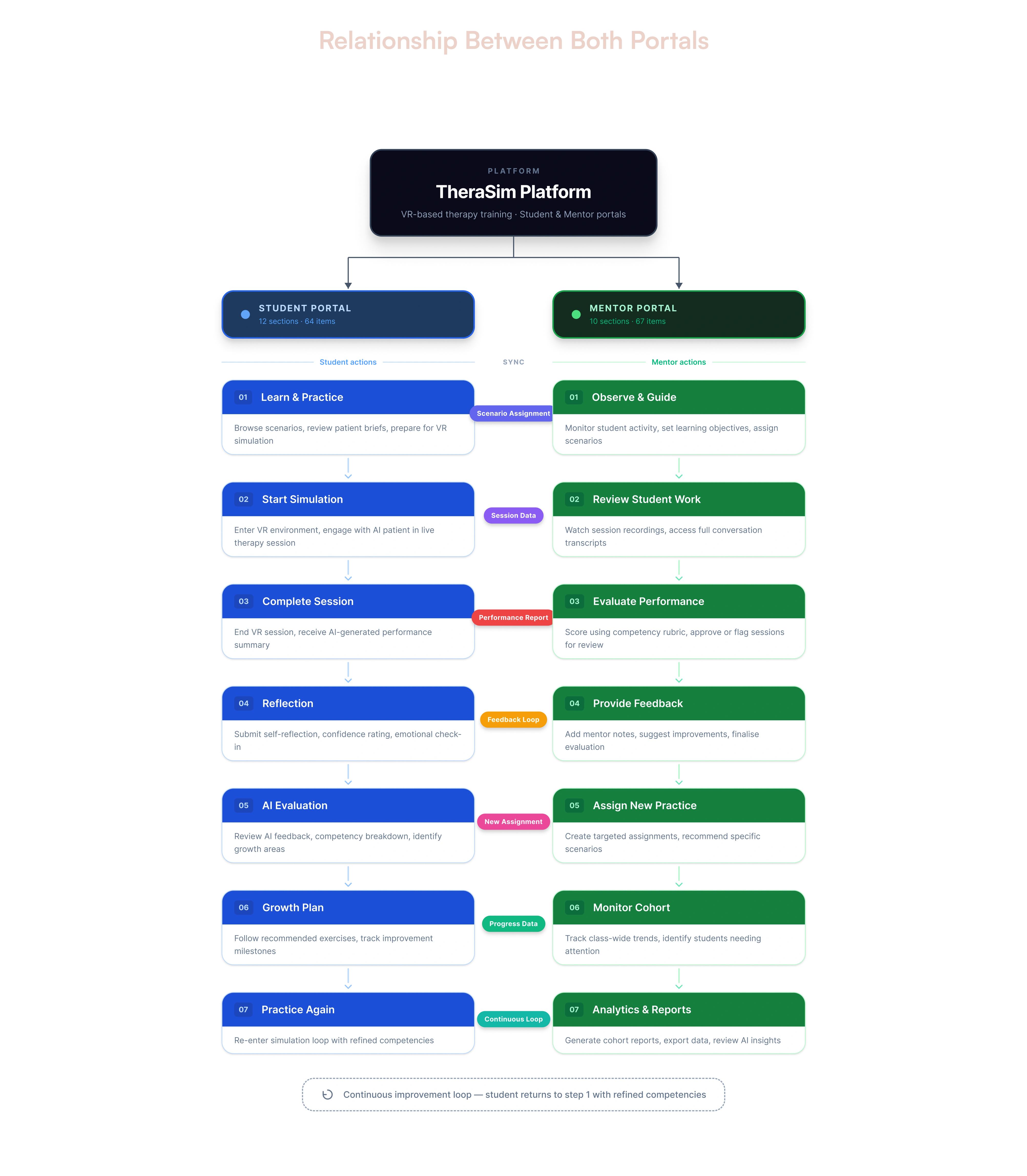
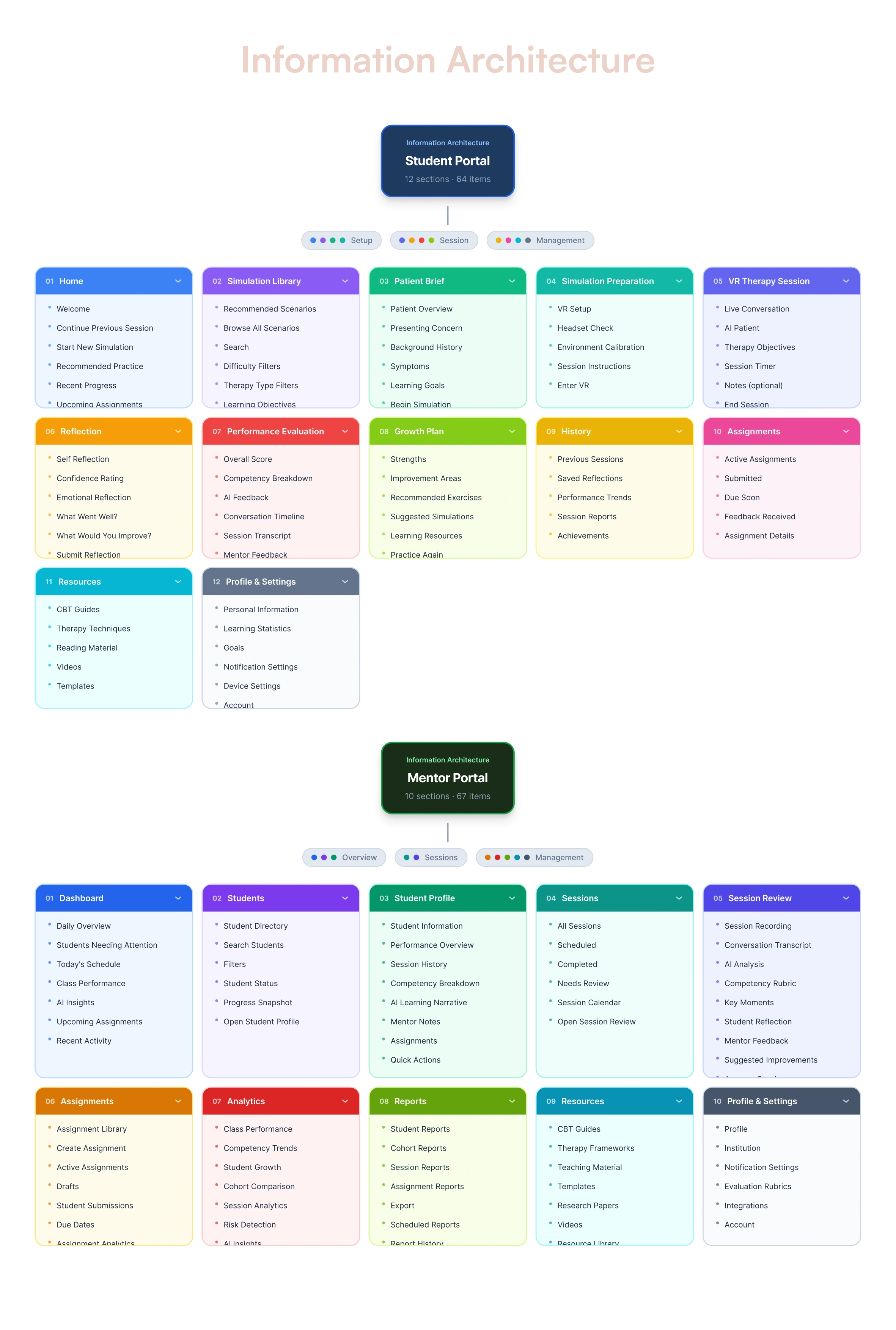
The relationship between the Student portal and the Mentor portal.


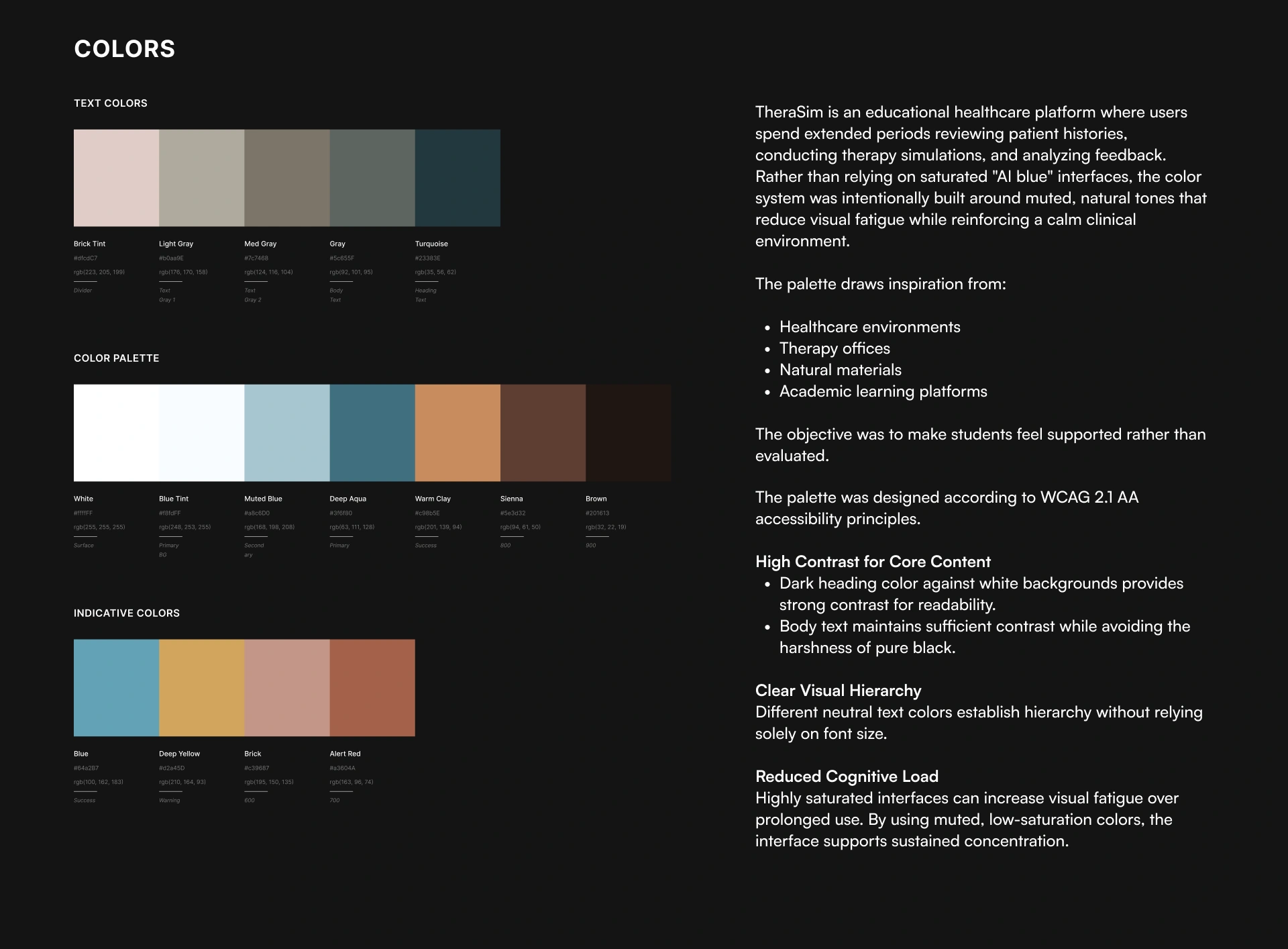
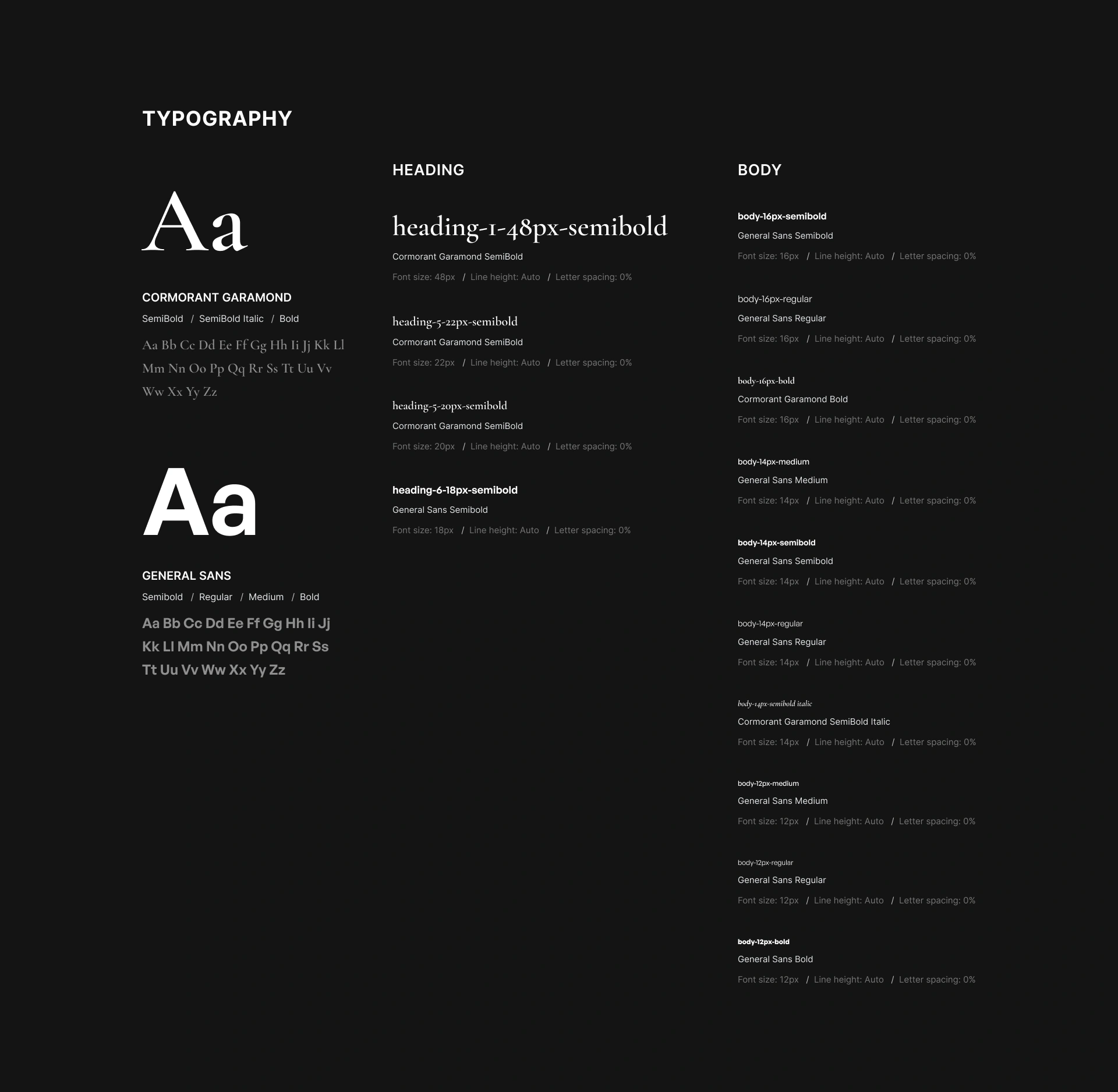


TheraSim is intended for prolonged learning sessions where students engage with patient scenarios, review AI-generated feedback, and reflect on their own clinical performance. Accessibility was therefore approached as an essential design principle rather than a compliance requirement. Every design decision aimed to reduce cognitive effort, improve readability, and ensure the platform remains usable by a diverse range of learners.
Long reading sessions are unavoidable in psychotherapy education. Patient histories, AI evaluations, and mentor feedback often require sustained attention.
To improve readability, the interface uses:
1. Large, legible headings for clear information hierarchy.
2. High line spacing and generous whitespace to reduce visual clutter.
3. Short line lengths for comfortable reading.
4. A clean sans-serif typeface for body content, paired with a serif display font for section headings.
This allows users to focus on understanding clinical information rather than decoding the interface itself.
The color palette was designed to maintain sufficient contrast while avoiding the harshness often associated with pure black-and-white interfaces.
1. Dark text on light surfaces ensures comfortable reading.
2. Interactive elements use clearly distinguishable colors.
3. Buttons and navigation maintain strong contrast against surrounding components.
The overall contrast aligns with WCAG 2.1 AA recommendations for text readability.
This allows users to focus on understanding clinical information rather than decoding the interface itself.
Important system feedback is never communicated through color alone.
Instead, the interface combines:
1. Icons
2. Labels
3. Progress indicators
4. Status badges
5. Supporting text
For example, a completed simulation is represented through a success icon, descriptive label, and progress state—not solely by a color change.
This approach improves usability for individuals with color vision deficiencies.
The navigation system remains consistent throughout both the Student and Mentor portals.
Users always know:
1. Where they are
2. What actions are available
3. How to return to previous screens
This consistency reduces cognitive load and allows learners to focus on the simulation rather than learning different interface patterns.
Clinical learning can already be mentally demanding.
The interface intentionally avoids unnecessary visual stimulation by using:
1. Soft, muted color tones
2. Minimal visual noise
3. Predictable layouts
4. Clear spacing
5. Progressive disclosure of information
Rather than presenting all information at once, content is divided into meaningful stages such as Patient Brief, Reflection, Performance Evaluation, and Growth Plan.
This supports concentration and minimizes information overload.
Performance is communicated through more than numerical scores.
Students receive:
1. Visual competency charts
2. Written AI explanations
3. Mentor feedback
4. Session summaries
5. Reflection prompts
Providing feedback in multiple formats accommodates different learning preferences while making evaluation easier to understand.
Every interactive element includes distinct visual states.
Users can easily differentiate between:
1. Default
2. Hover
3. Active
4. Selected
5. Disabled
This improves discoverability and provides immediate feedback during interaction.
TheraSim was designed to support learners with varying levels of confidence and experience.
The platform encourages reflection before evaluation, allowing students to assess their own performance before viewing AI analysis or mentor feedback.
This sequence promotes self-awareness while reducing the anxiety often associated with performance assessment.
The interface has been designed with flexibility in mind.
Layouts and components are structured to support:
1. Responsive screen sizes
2. Adjustable spacing
3. Scalable typography
4. Future accessibility enhancements such as screen reader support and keyboard navigation
This ensures the platform can evolve without requiring major redesigns.
• Reduced pre-clinical anxiety • Increased practice opportunities • Structured mentor feedback • Personalized learning
• Better preparation before clinical placements • Consistent evaluation • Repeatable practice
• AI-driven patient simulations • VR immersion • Learning analytics • Longitudinal progress tracking
Designing TheraSim reinforced a belief that meaningful experiences begin with understanding people before designing technology. The project challenged me to think beyond interfaces and consider how design can build confidence, encourage reflection, and support learning in emotionally complex environments. More importantly, it demonstrated that thoughtful design is not only about creating usable products, but about creating experiences that genuinely prepare people for the responsibilities they will carry in the real world. The first real therapy session should never be the first opportunity to build confidence. TheraSim exists to ensure that students step into clinical practice prepared—not only with knowledge, but with experience, reflection, and confidence.
Bringing Psychology to Reality
Akira
2023
Blender • Figma • UX/UI Design • VR Development
ARCHIVED
"Confidence is built through repetition."