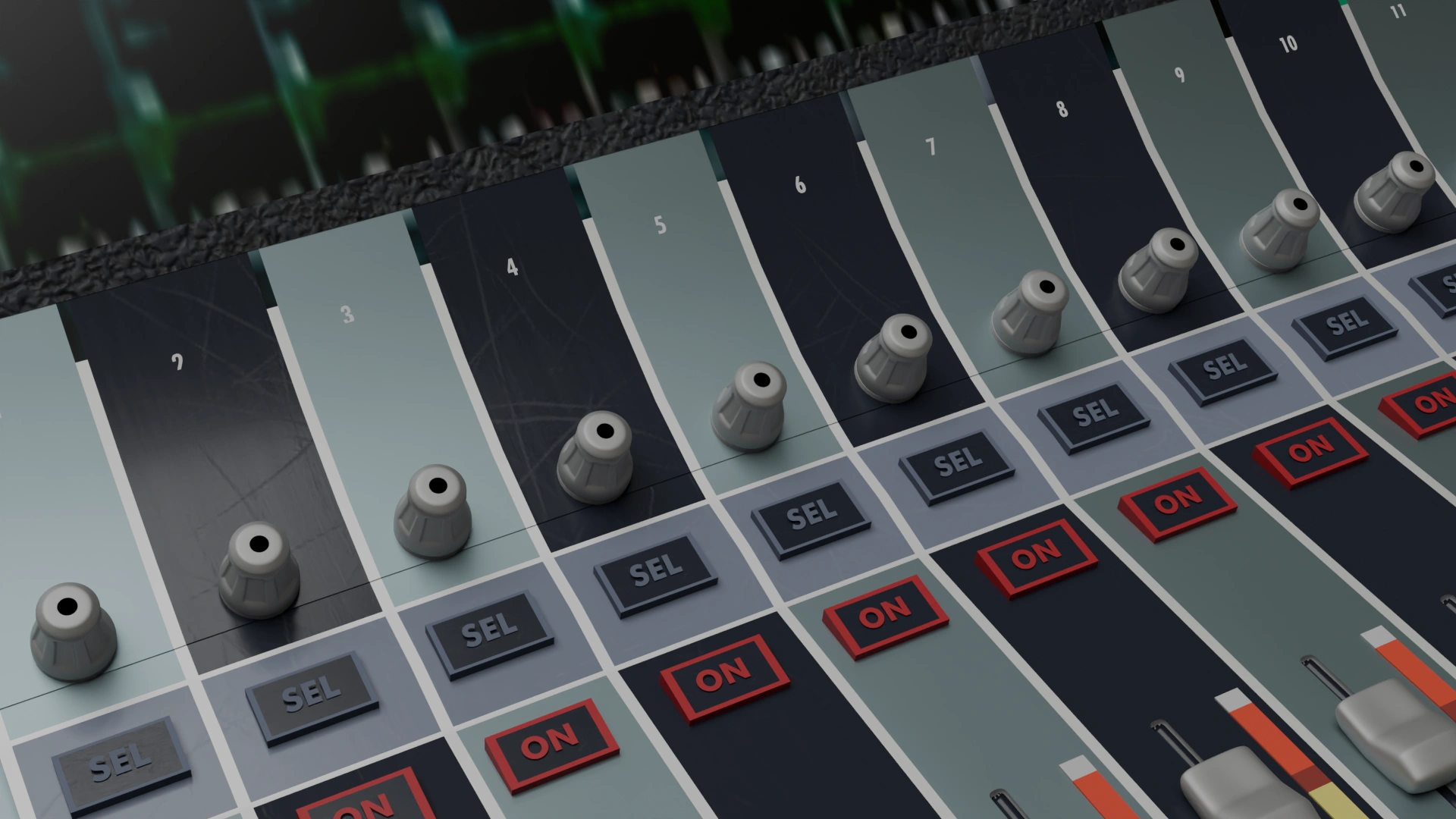
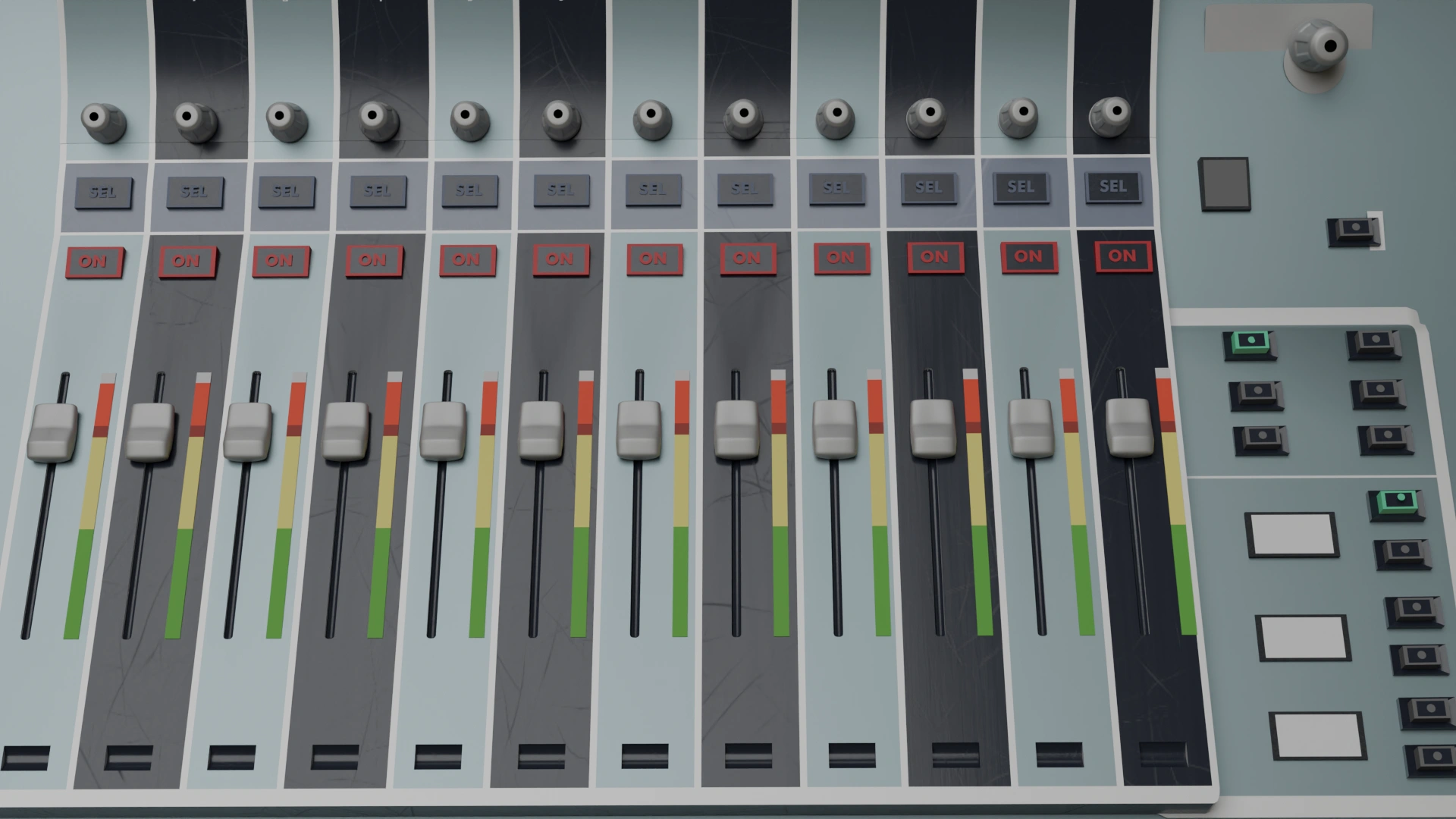
Controls are grouped by function, making it easier to locate and adjust individual channels without losing context.
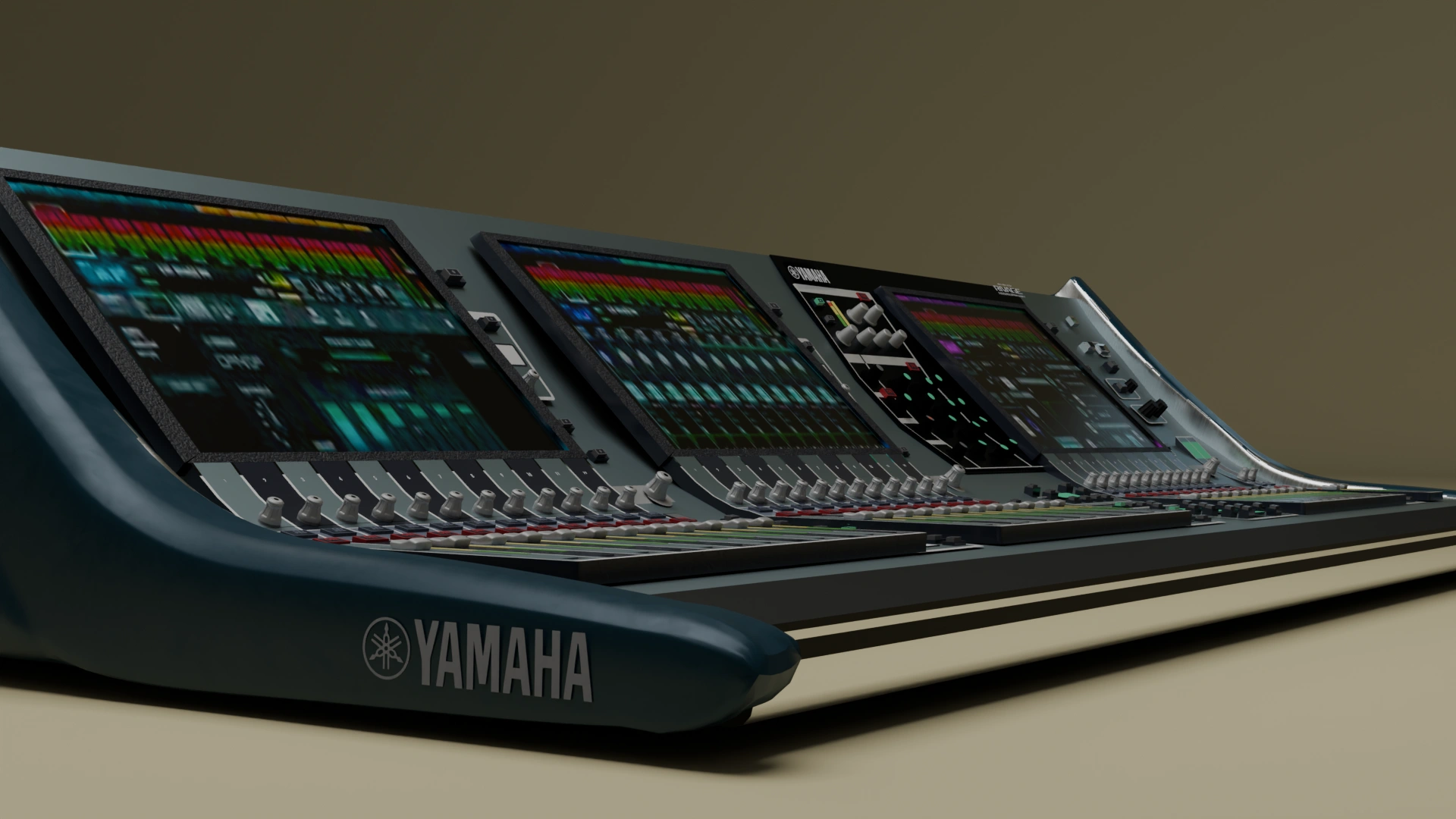
Blender•2026
An industrial product visualization exploring precision hard-surface modeling, mechanical detailing, realistic materials and production-quality rendering.
“Precision is experienced through interaction long before it is understood through engineering.”
Rivage PM Series
Industrial Product Visualization
3D Artist
2 Weeks
Permanent Collection
Precision becomes invisible when every interaction feels inevitable.
A sound mixer is more than a collection of knobs and sliders. Every control has a purpose, every surface supports the way it's used, and every detail contributes to the product's identity. Recreating this object was an opportunity to study how engineering and design come together to create something that feels both functional and intuitive. The focus was on capturing the balance between functionality and form—where every detail serves a purpose without drawing attention to itself.
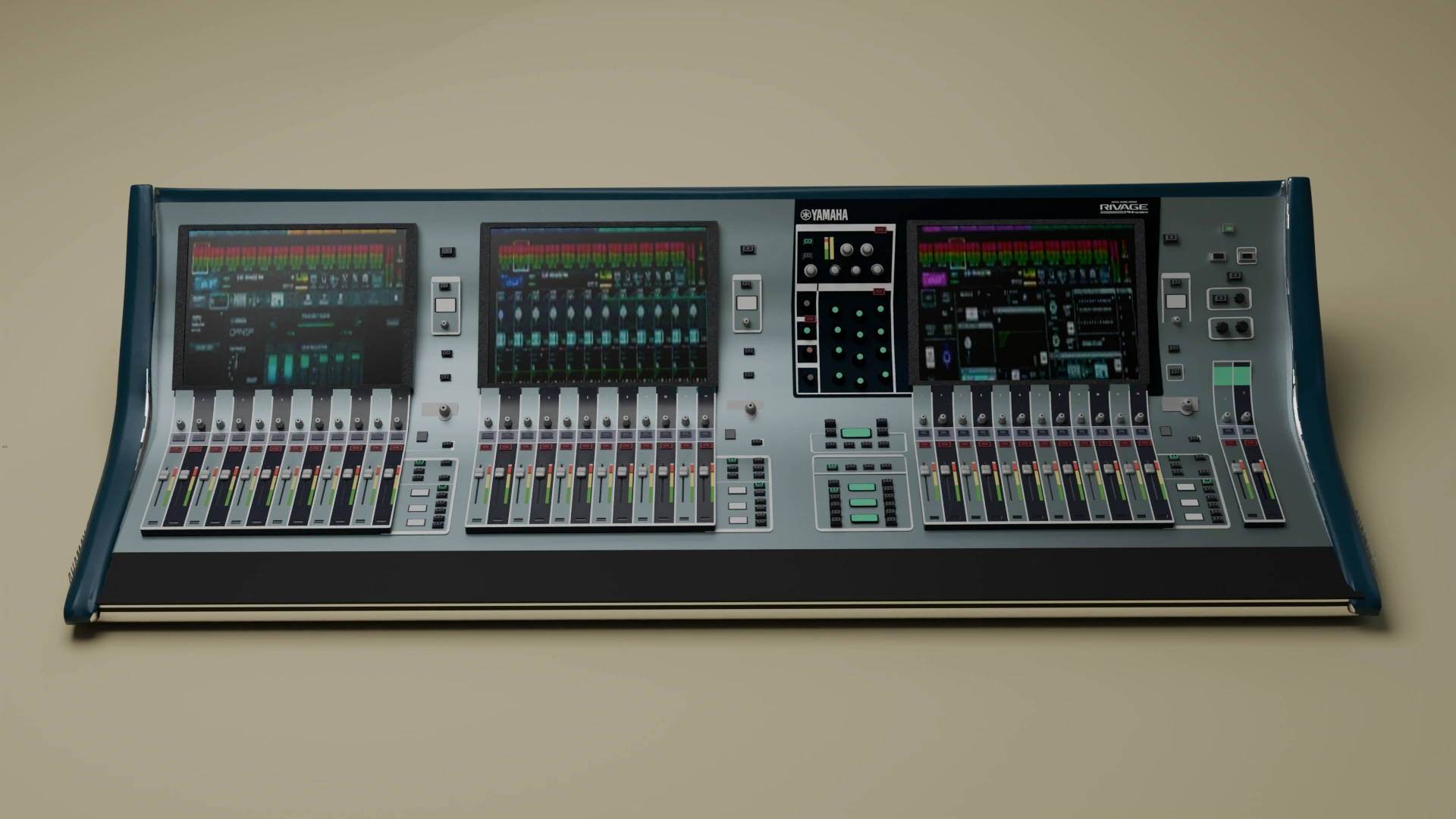
The Rivage PM Series is a high-fidelity recreation of Yamaha's flagship digital mixing console. The project explores precision hard-surface modeling, industrial product visualization, and the challenge of recreating thousands of mechanical components while maintaining clean topology and realistic materials.
Before a product can look realistic, it first needs the right foundation. This stage focused on building accurate shapes and balanced proportions before any materials or lighting were added. Getting the structure right early made every reflection, texture, and small detail feel more natural in the final result.
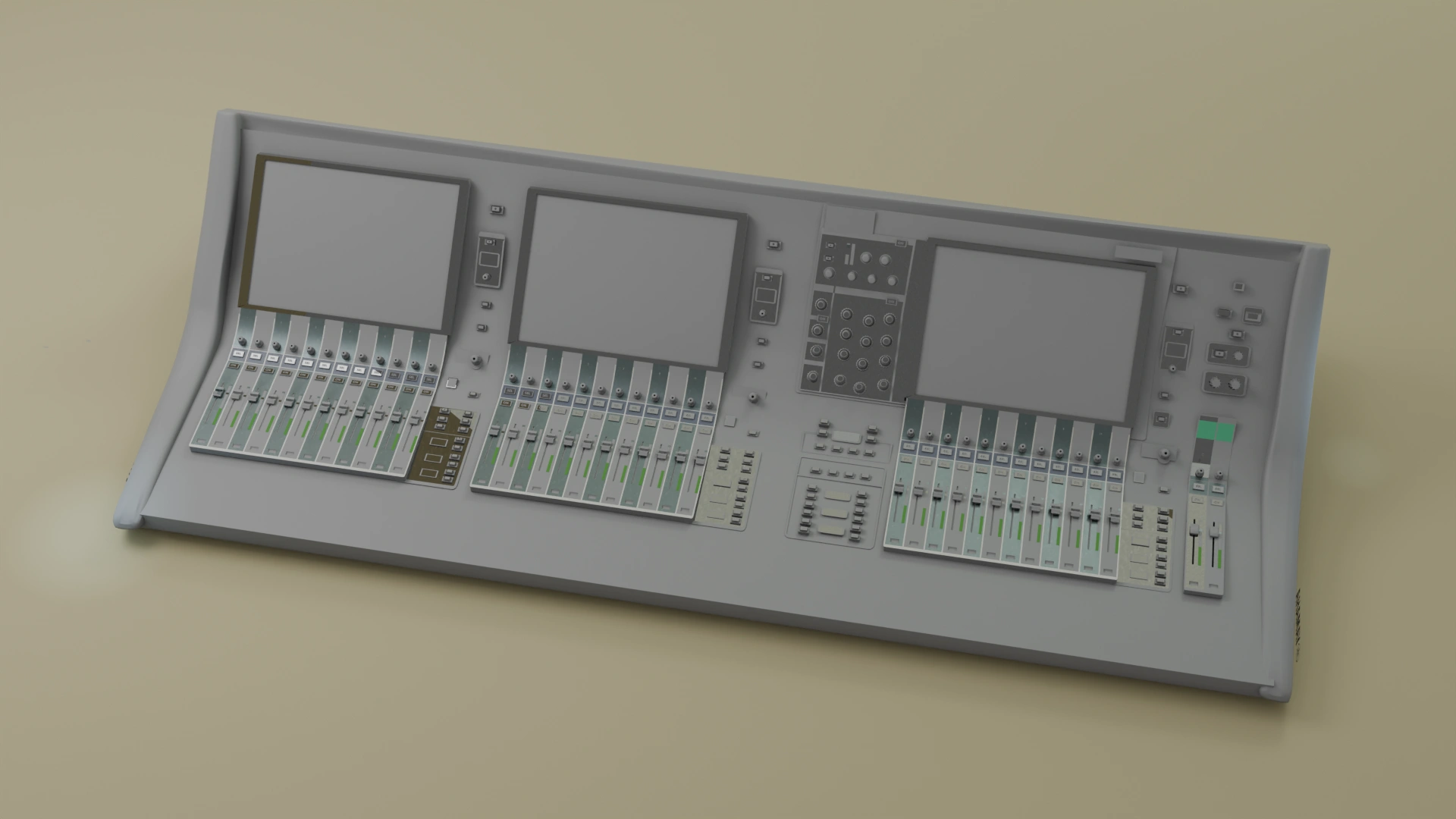
The model was built around accurate shapes before any materials or lighting were introduced.
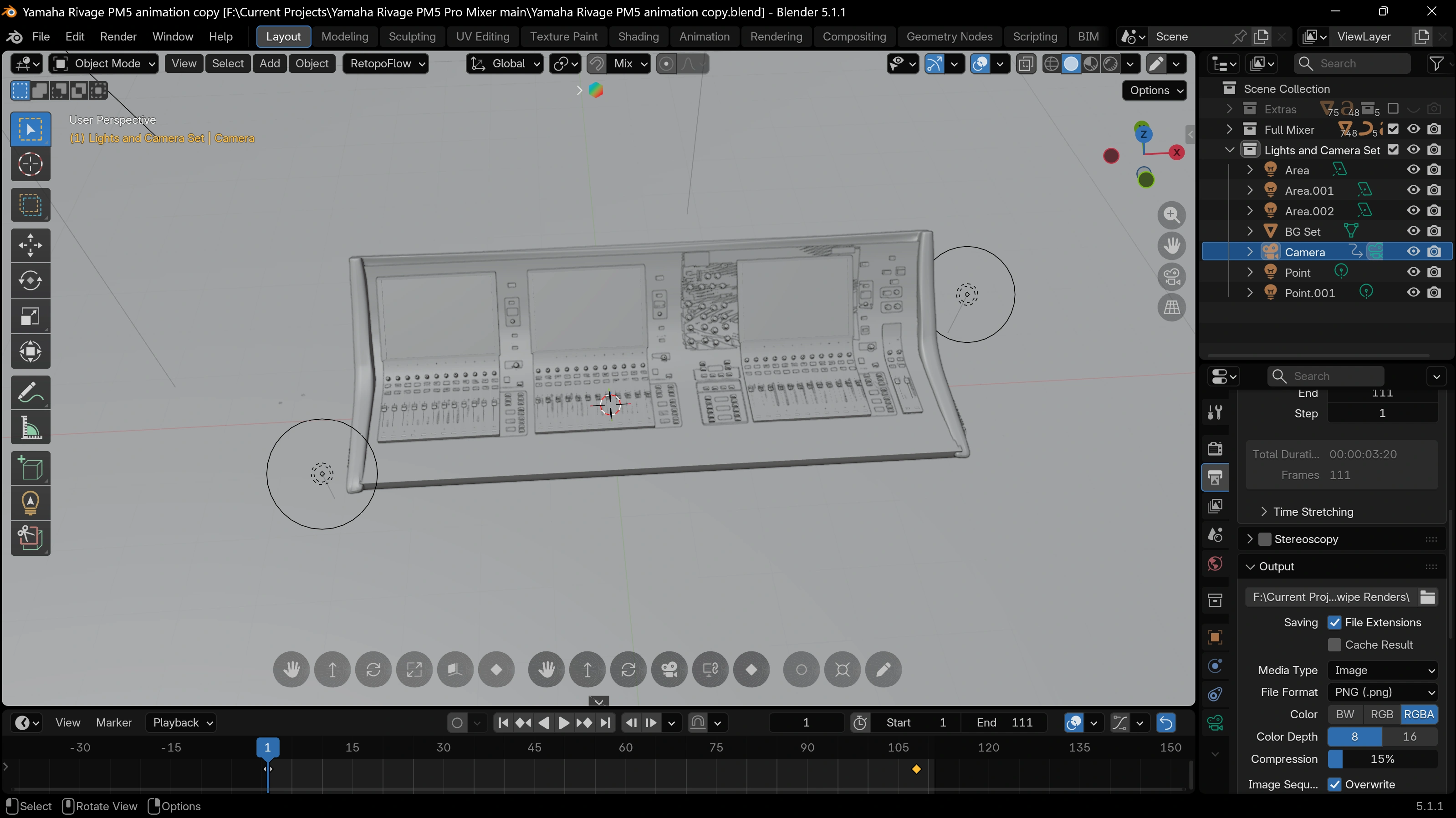
Early iterations focused on refining proportions before adding finer details.
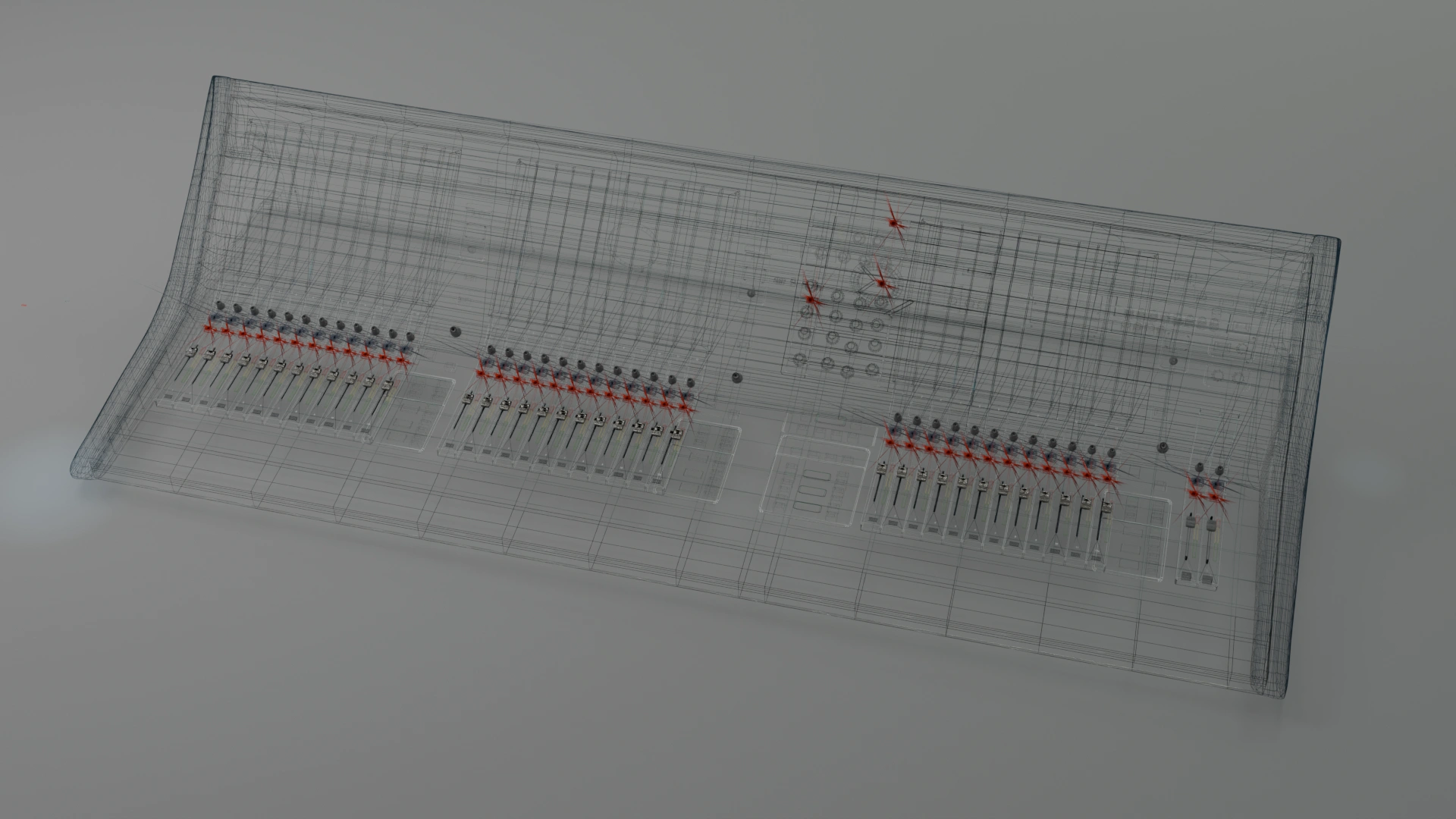
Looking beneath the surface helped keep every curve clean, smooth, and consistent.
Precision begins with proportion, not detail.
Materials do more than define appearance. They communicate how an object should be used, where it should be touched, and which parts deserve attention. Recreating these subtle differences helped preserve the product's character while making every interaction feel believable.
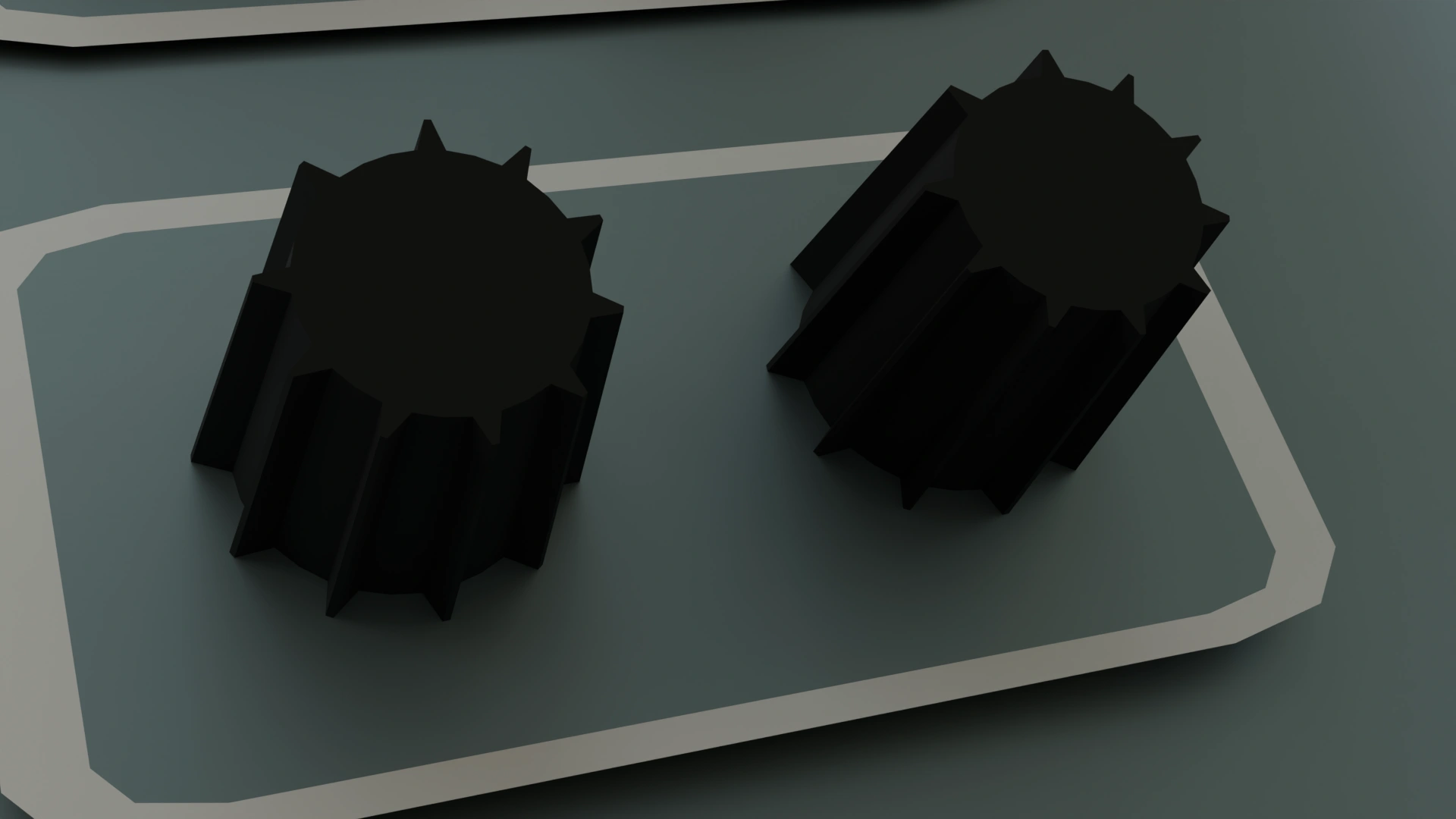
The textured finish improves grip while giving the control a confident, tactile feel.
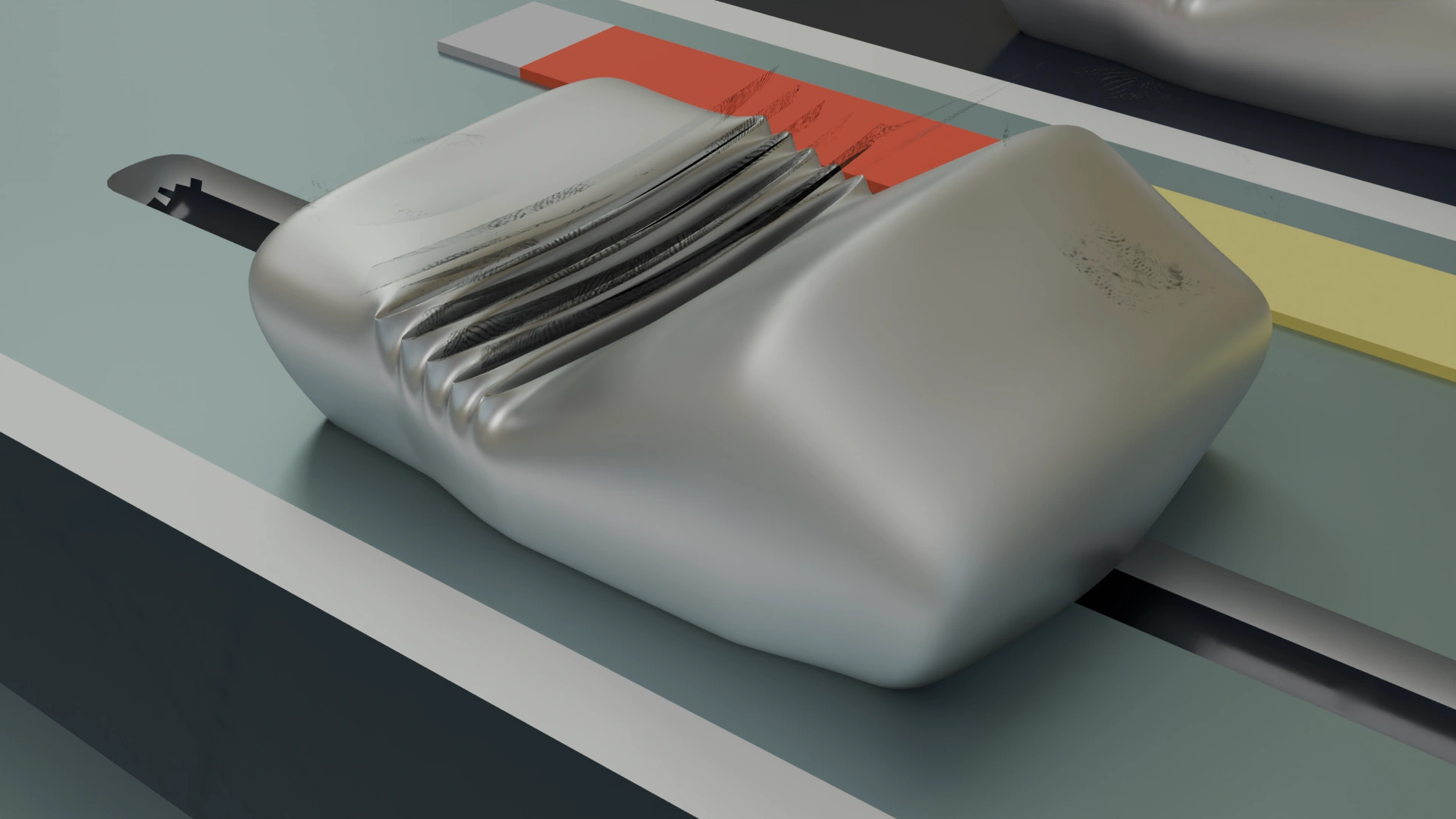
Smooth plastic surfaces reduce friction and allow precise adjustments during use.
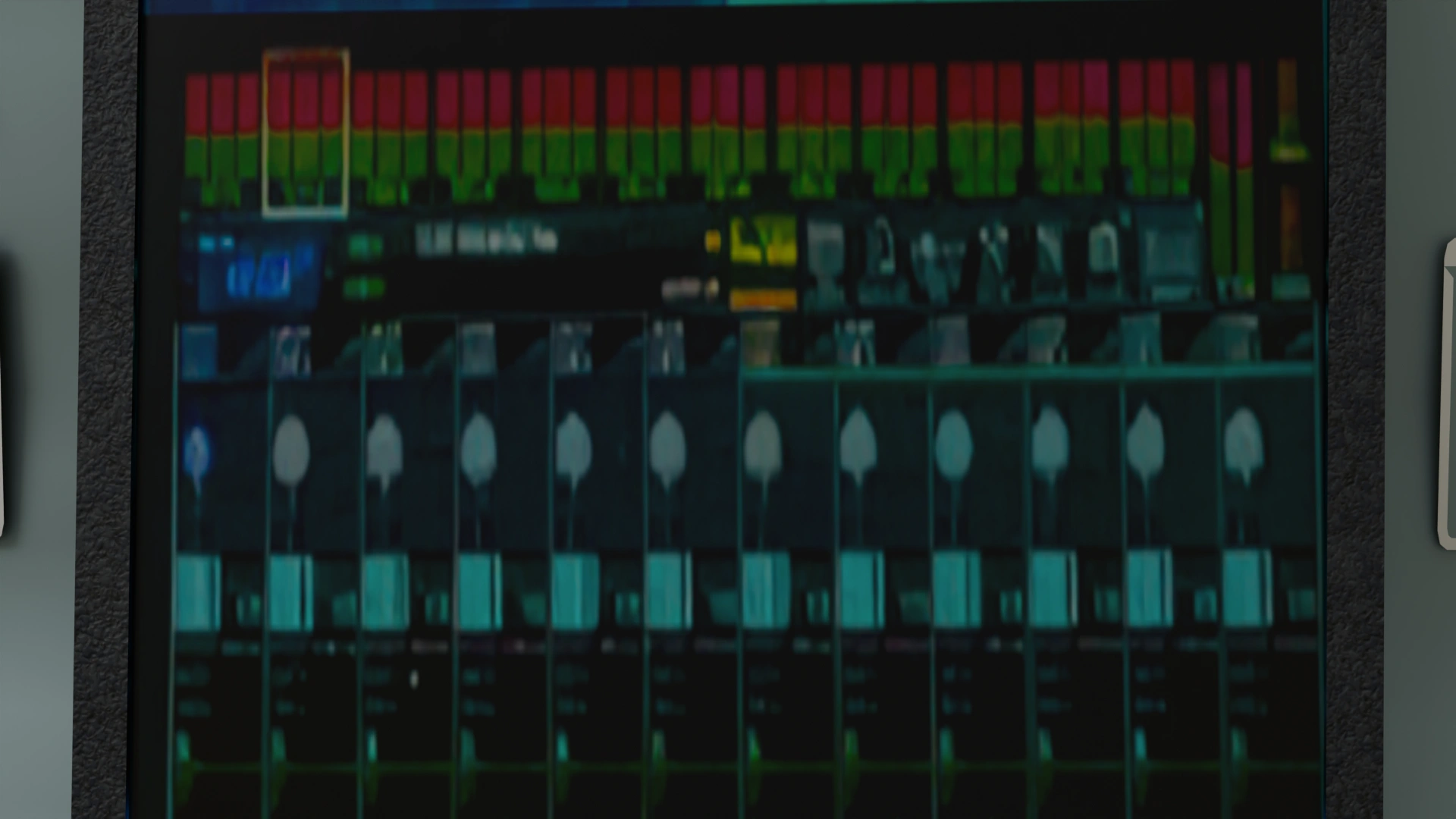
Subtle illumination keeps important information visible without competing with the controls.
Materials communicate purpose before they communicate beauty.
A sound mixer is designed to be understood at a glance. Sliders control volume, rotary knobs adjust individual settings, and color-coded elements help separate functions. Every control is placed to reduce confusion and support quick, confident adjustments during use.
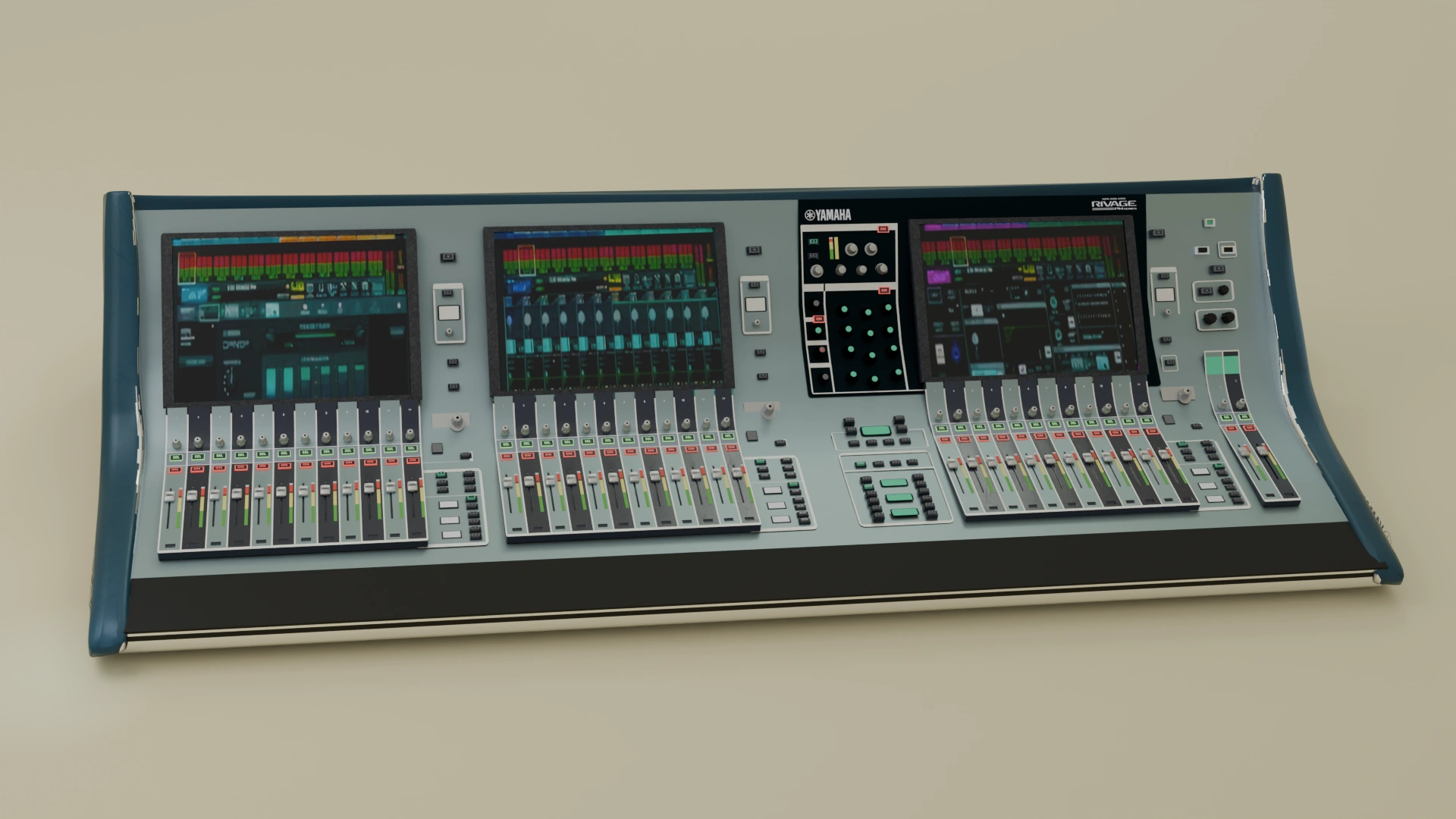
Controls are grouped by function, making it easier to locate and adjust individual channels without losing context.
Different knob sizes, colors, and spacing help the most important controls stand out first.
Labels and indicators allow users to confirm adjustments quickly, reducing the need for trial and error.
The best interfaces explain themselves.
This project demonstrated that industrial product visualization is defined by consistency rather than complexity. Every knob, fader, connector and interface element contributed to a cohesive whole, reinforcing the importance of precision modeling, disciplined topology, and believable material interaction.
Complex Modeling and Texturing
Akira
2026
Blender • Cycles
ARCHIVED
"Engineering deserves craftsmanship."